



The Top 6 Best-Selling Guitar Picks from 6 Years of Rombo Picks (And Why Guitarists Love Them)
The Top 6 Best-Selling Guitar Picks from 6 Years of Rombo Picks (And Why Guitarists Love Them)
After six exciting years of designing, testing, and shipping high-quality guitar picks around the world, we’ve learned a lot about what guitarists truly value. From jazz players to metal shredders, beginners to professionals — certain picks consistently rise to the top.
In this article, we’re celebrating our top 6 best-selling guitar picks, based on real customer preferences, playing styles, and thousands of reviews. Whether you’re looking for precision, versatility, warmth, or speed, there’s something here for every guitarist.

We’ll also share how these picks evolved, how we determined their popularity, and help you figure out which one might be right for your style. If you’re curious about how shape, thickness, material, and grip influence your playing — this guide has it all.
Our Journey: 6 Years of Listening to Guitarists
Rombo Picks was born from a deep obsession with design and the belief that guitar picks deserved more innovation. Since day one, we’ve been testing materials, studying ergonomics, and gathering insights from thousands of guitarists around the world.
Over the past six years, these insights have shaped every design decision. The picks on this list aren’t just best-sellers — they’re symbols of how far we’ve come in understanding what players want in their hands.
Let’s dive into the top 6 picks, why they stand out, and what real musicians have to say about them.
1. Rombo Diamond — Precision and Power for Advanced Players
Why It’s a Bestseller
The Rombo Diamond has been our best-selling pick for years. With a sharp, focused tip and a sturdy 2.00 mm thickness, it delivers incredible precision and fast response. It’s engineered for technical players who rely on accuracy and speed, but also want power and volume.
Ideal For:
-
Fast alternate picking
-
Shredding and solos
-
Djent and technical metal (we call it the palm mute master!)

Playing Feel
The pointed shape gives a tight, precise attack. Players describe it as “gliding through strings with minimal resistance.” Despite its stiffness, it feels natural thanks to beveled edges and a textured grip.
The tone is dark, direct, percussive, and focused — ideal for cutting through a mix. Its full-body shape adds depth and enhances low-end frequencies.
Common Reviews:
-
“Best pick I’ve ever used for fast picking.”
-
“It feels like a scalpel for your tone — ultra precise.”
-
“I use it for both solos and tight rhythm parts. It’s super stable.”
Behind the Design
This pick was designed for advanced players looking for full control. Its geometry, grip pattern, and material blend make it one of our most complex, feedback-driven designs.
2. Rombo Origami — The Ultimate All-Rounder
Why It’s a Bestseller
Origami stands out for its adaptability. Inspired by folded paper structures, its ergonomic shape offers a natural grip that suits nearly every genre. With mid-range thickness and moderate flex, it balances comfort and articulation.
It also showcases our innovation in grip design: The folded surfaces prevent rotation, providing extra stability.
Ideal For:
-
Strumming and arpeggios
-
Blues leads, pop, and rock riffs
-
Players who switch styles frequently
-
Warm tones on acoustic guitar

Playing Feel
The surface texture is subtle but secure. It feels balanced — neither too thick nor too light. Whether you’re strumming chords or picking melodies, it responds with warmth and clarity. The rounded tip reduces string noise while keeping note definition.
The variable thickness (a thicker body tapering to a thinner tip) helps preserve bass tones and reduce that annoying click-clack sound on acoustic guitars.
Common Reviews:
-
“It’s the pick I reach for when I don’t know what style I’ll play.”
-
“Great for both acoustic and electric.”
-
“Super comfortable. I never drop it.”
Why It Matters
Every guitarist needs a workhorse pick, and Origami is ours. Its design isn’t extreme in any one direction — and that’s exactly why it works so well.
3. Rombo Horizon — Elegance Meets Performance
Why It’s a Bestseller
Horizon blends classic elements with modern engineering. A bit thinner than the Diamond, with a super-curved tip and elegant silhouette, it’s a favorite for players who want clean articulation without harshness.
Ideal For:
-
Funk and jazz fusion
-
Sweep picking
-
Riffs that demand clarity (metal and rock included)

Playing Feel
Horizon delivers controlled brightness. The tone is clean and expressive, with just enough edge for fast passages. Its surface geometry enhances grip, while the beveled edges allow subtle dynamic shifts.
It’s designed to feel effortless — and yes, it’s my personal favorite, and the design I’m most proud of.
Common Reviews:
-
“The clearest attack I’ve ever had.”
-
“My go-to for funk rhythm and jazzy leads.”
-
“A great compromise between flexibility and control.”
The Experience
Horizon is the kind of pick that reveals its strengths over time. Surgical, reliable, and deeply satisfying.
4. Rombo Shell — A Refined Jazz III Alternative
Why It’s a Bestseller
Small, sharp, and punchy — Rombo Shell is our tribute to the Jazz III, reimagined with better grip and more comfort. Designed for speed and control, it stays securely in your fingers, even during intense play.
Ideal For:
-
Solos
-
Funk comping
-
Fast melodic playing (metal, rock, fusion)

Playing Feel
Shell offers surgical precision in a compact size. The tip is sharp, and the grip is firm. Many describe it as an extension of the fingers — perfect for speed-focused genres.
Common Reviews:
-
“It’s like a Jazz III but better in every way.”
-
“So fast, but still feels controlled.”
-
“My favorite pick for complex jazz lines.”
Design Insight
We preserved the classic jazz-style tip but enhanced the grip and ergonomics. For fans of small picks and fast play, Shell is a game-changer.
5. Rombo Classic — Warm, Familiar, and Beginner-Friendly
Why It’s a Bestseller
Rombo Classic is our most traditional pick. With a slightly flexible 0.38 mm profile and soft texture, it’s ideal for strumming and dynamic acoustic playing.
Ideal For:
-
Acoustic guitar
-
Folk and singer-songwriter styles
-
Beginners and casual players

Playing Feel
It feels light and familiar, with a warm and rounded attack. The soft grip prevents slips without distracting from your playing experience.
Common Reviews:
-
“Reminds me of old-school picks, but better.”
-
“My students always prefer this one.”
-
“Perfect for acoustic gigs.”
Why It’s Essential
Not everyone needs an aggressive or technical pick. Classic offers an easy entry into modern pick ergonomics — without overwhelming new players.
6. Rombo Prisma — Designed for Bass and Low Tunings (But Loved by Guitarists Too)
Why It’s a Bestseller
Prisma was originally designed for bass — but it quickly became a favorite among guitarists playing heavy, low-tuned music. Its thick profile and broad tip deliver power and control.
Ideal For:
-
Bass guitar (all styles)
-
Metal and drop tunings
-
Players who want a large, pointy, powerful pick

Playing Feel
Thick, textured, and grippy, Prisma provides a confident, punchy attack. Players say it adds weight and depth to their tone and helps lock in a solid rhythm.
Common Reviews:
-
“Perfect pick for bass — finally.”
-
“I use it on baritone guitar. The control is unreal.”
-
“Heavy pick for heavy tones.”
Design Insight
We included 3D shapes and curved edges to increase mass while maintaining flexibility. Combined with a very sharp tip, Prisma produces bright tones while preserving the round warmth you'd expect from a heavier pick.
How We Determined These Top 6 Picks
This list is based on:
-
Sales data from the last six years
-
Review volume and sentiment
-
Return purchases and customer loyalty
-
Direct feedback from our community
Each pick earned its place through performance, popularity, and long-term player satisfaction.
How to Choose the Right Guitar Pick: A Complete Guide
1. Understand Your Playing Style
Fast soloist? Go firm and sharp.
Strumming chords? Try something thinner and flexible.
2. Explore Pick Thickness
-
Thin (<0.55 mm): Brighter sound, ideal for strumming
-
Medium (0.55–1 mm): Balanced tone and feel
-
Thick (1–2.5 mm): Great for precision and heavy styles

3. Pick Shape and Size
-
Small picks: Control and speed
-
Large picks: Easier grip, especially for big hands
-
Sharp tips: Precision
-
Rounded tips: Warmth

4. Material and Surface Texture
-
Hard materials (e.g., CrystalBright): Bright, snappy tone
-
Softer materials: Warm tones, smooth feel
Tone can also be greatly influenced by shape and size. For example, a pick made from soft materials can sound brighter if it is pointy and thin.
Grip texture, 3D geometries, and variable thickness help prevent slips and enhance comfort — features we’ve heavily innovated at Rombo.

5. Try Before You Decide
Most players find their ideal pick only after trying several. That’s why we offer Variety Packs — so you can explore freely.
6. Factor in Genre and Instrument
-
Metal/Prog: Thick, sharp picks
-
Jazz: Small, smooth picks
-
Acoustic: Medium or thin, rounded picks
-
Bass: Thick, textured picks
(But of course — rules are meant to be broken.)
7. Ergonomics and Comfort
Comfort isn’t cosmetic. A well-designed pick reduces fatigue, increases precision, and makes you a better player.
Still Not Sure? Try Them All.
The best way to find your ideal pick is to experiment.
🎸 Try our Rombo Variety Pack to explore every shape and material.
👉 Use our Rombo Guitar Pick Finder Tool to get personalized recommendations based on your style and preferences.

PIcture by @brandon.delgadoe
Final Thoughts
Each of these picks represents a different type of player — and a different chapter of our Rombo journey. Whether you're discovering us for the first time or have been with us from the start, we hope this guide helps you find your perfect match.
From classic silhouettes to futuristic contours, every Rombo pick is built with care, feedback, and inspiration.
Thanks for being part of our story.
— The Rombo Picks Team


The Problem With Standard Guitar Picks: Why a New Approach Matters
When you think about essential tools for guitar players, picks—small, simple, and often overlooked—rarely get the attention they deserve. Yet this tiny piece of gear has a profound impact on a guitarist’s tone, speed, dynamics, and comfort.

Since the 1960s, the world of guitar picks has been largely defined by one dimension: thickness. It was during this era, particularly through innovations popularized by Jim Dunlop, that the concept of standardizing picks based on thickness took root.
And while that was an important step at the time, focusing only on thickness ignored a much bigger picture—a picture that has only become more complex with the evolution of music itself.
How Standardization Limited Guitar Picks
Back in the 60s, popular genres like blues, folk, and early rock 'n' roll dominated the airwaves. Players needed basic, reliable tools, and a simple pick thickness classification was an easy solution.

However, when manufacturers zeroed in on thickness alone, other critical elements of guitar pick design became secondary. Important factors like:
-
Material (affecting grip and tone),
-
Tip shape (impacting precision and speed),
-
Overall size (affecting comfort, control and tone),
-
Body shape (influencing ergonomics and attack),
-
Surface texture (enhancing comfort),
...were often treated as afterthoughts.
This "one-size-fits-all" approach worked well enough—for a time. But it didn’t anticipate the explosion of new playing styles, techniques, and genres that were just around the corner.

New Music Demands New Tools
Think about the musical landscape today compared to the 1960s. In those days, there was no thrash metal, no shred guitar techniques, no punk rock anthems, no hyper-produced modern pop songs. Today’s guitarists face challenges that players 60 years ago could not have imagined.

We now have styles that demand:
-
Extreme speed and precision (like shredding or sweep picking),
-
Aggressive and rhythmic strumming (seen in punk or alternative rock),
-
Nuanced dynamic control (essential in modern pop, R&B, and fingerstyle genres),
-
Highly technical solos requiring picks that can glide effortlessly across strings.
In other words, today's players need picks designed for specific techniques, tones, and comfort needs—not just a slightly thicker or thinner version of the same old pick.
Rethinking the Guitar Pick: The Rombo Approach
At Rombo Picks, we saw this gap clearly. Founded by two passionate guitar players, Rombo is about rethinking everything you thought you knew about guitar picks.

We believe that a guitar pick is not just a piece of plastic—it's an extension of your fingers, your style, and your voice as a musician. That’s why we’ve developed 12 unique guitar pick shapes, each designed thoughtfully for different playing styles and preferences.

Some of the key innovations that set Rombo Picks apart include:
-
3D Ergonomic Design: Each pick is sculpted for natural finger placement, reducing hand fatigue during long sessions and increasing the total mass of the pick reducing treble and pick noise.
-
Micro-Nodule Grip Structure: A unique surface texture that enhances grip without being abrasive.
-
High-Mirror Polished Tips: For ultra-smooth string release, allowing for faster and more precise playing and clearer tones.
-
Variety of Materials: Including sustainable materials like our EcoBlack line or CrystalBright
-
Tailored Sizes and Thicknesses: We don’t believe in one-size-fits-all. Our picks come in a range of thicknesses, shapes, and sizes, each fine-tuned for a specific feel and response.
Whether you’re a fast lead guitarist, an aggressive rhythm player, a nuanced fingerstyle artist, or a beginner exploring different styles, there's a Rombo pick designed with your specific needs in mind.

Why Material and Shape Matter
Many guitarists don’t realize how much pick material influences tone. Softer materials can create a warmer sound, while harder materials bring out a brighter, more articulate tone.
Similarly, tip shape can completely change your playing experience:
-
Sharp tips provide incredible precision for solos and fast passages.
-
Rounded tips are perfect for smooth strumming and a softer, more mellow sound.
Size matters too—larger picks give you better control and are easier to hold, while smaller picks can offer greater agility and speed.
At Rombo, we embrace the complexity. We celebrate the idea that every player’s needs are different—and that’s something a standard medium-thick pick could never fully address.
The Future of Guitar Picks is Personal
The days of picking a "standard" guitar pick off the rack without a second thought are behind us. Guitarists today deserve more—more comfort, more precision, more choice.
At Rombo, we believe that the guitar pick of the future is not standardized—it’s personalized.
This is why we offer not just one or two shapes, but a full collection designed to match the diverse needs of modern players. With Rombo, you can find the perfect pick for shredding, strumming, sweeping, tapping, or whatever new technique you invent tomorrow.
Because when your pick feels right, your music feels right.
Find Your Perfect Pick
Ready to discover the difference a truly modern pick can make? Explore the Rombo collection today and find the pick that matches your playing style, tone, and passion.

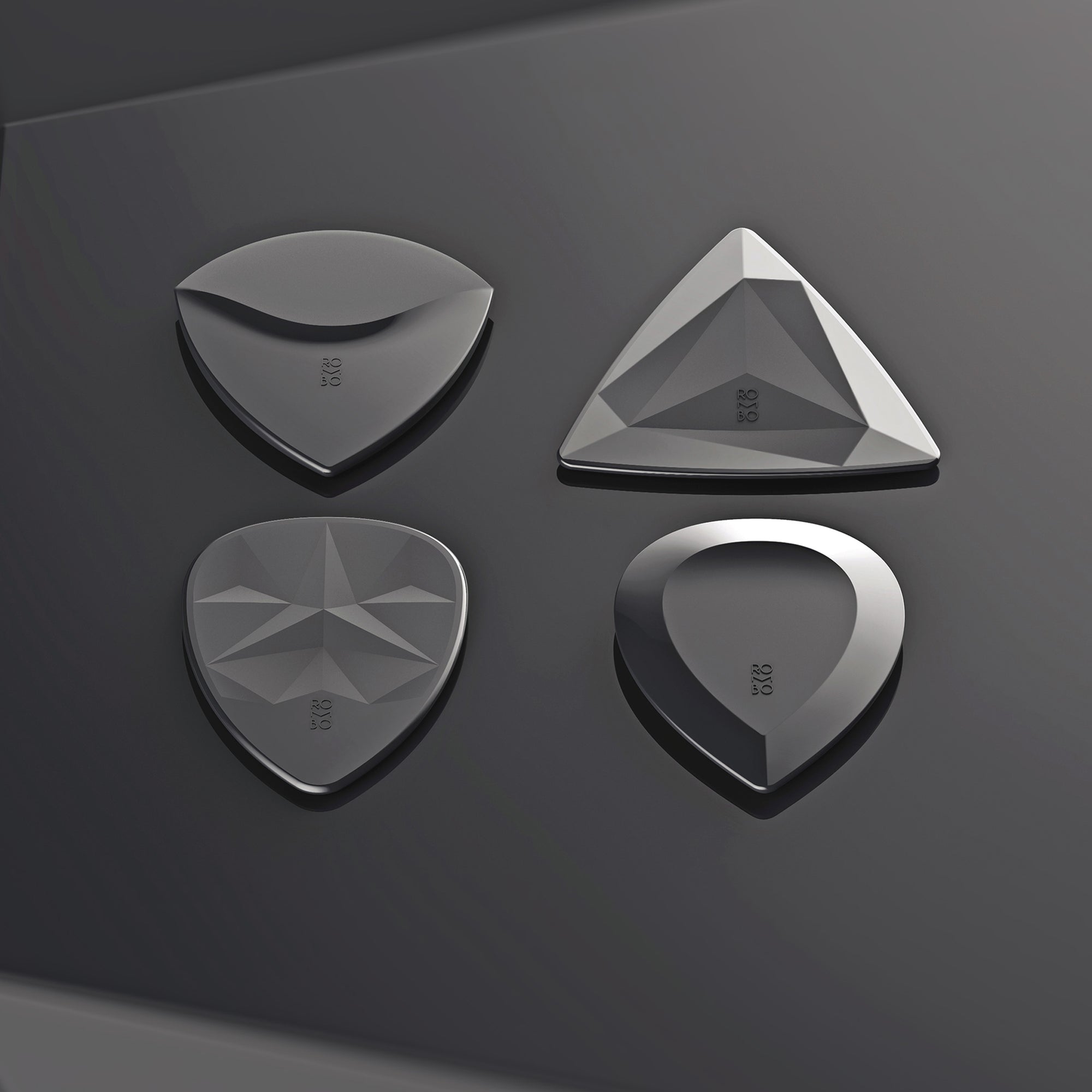
New guitar picks for 2021 - How over 1500 guitar players helped us co-design our guitar picks:
In May 2020, Judith and I had finished the first 3D sketches of our four new guitar pick models. However, the picks weren’t 100% ready.
The thickness, the size, and even the names of the picks were still undefined.
We decided to take a new approach and involve as many guitarists as possible to help us co-create our new guitar picks.
What is a signature guitar pick:
Signature guitar picks are common in the guitar pick world.
These picks were developed with the help of some expert and famous guitarists from a specific music field.
From our point of view, this is a very narrow design path that only considers the opinion and guitar playing style of one person.
Our approach: The opposite of a signature pick:
The guitar community has strongly supported Rombopicks since its beginning in 2019.
We did not want to create new guitar picks without asking the people who have been with us since the beginning. You guys and girls are the core of Rombo, and you should decide which products we develop.
The most logical step was to create a big survey to allow users to tell us how they prefer their guitar picks.
We think this is the only way to develop our guitar picks, based on the wants of our users, allowing us to make essential decisions about our company's direction.

This is only possible by listening to the thoughts of every guitar player.
In addition, by asking precise questions about guitar picks, we are able to create more awareness of complex issues, like: Why are guitar picks thick or thin? How they behave when the size changes? Does the flexibility of a guitar pick affect the tone? What about the material?
When the user is aware of the product features, he/she can deliver a useful vote.
Since the beginning, we have been researching all these areas and are sharing them with you. With every article about plectrums we have written, we have contributed to the knowledge you have about your gear so you will be able to decide which gear is the best for you and understand why.
The results of the survey:
Participants:
1.552 guitar players (including us) have participated in the survey and therefore have took part in the design process of these new guitar picks for 2021.
336 of them left a private message with detailed information.

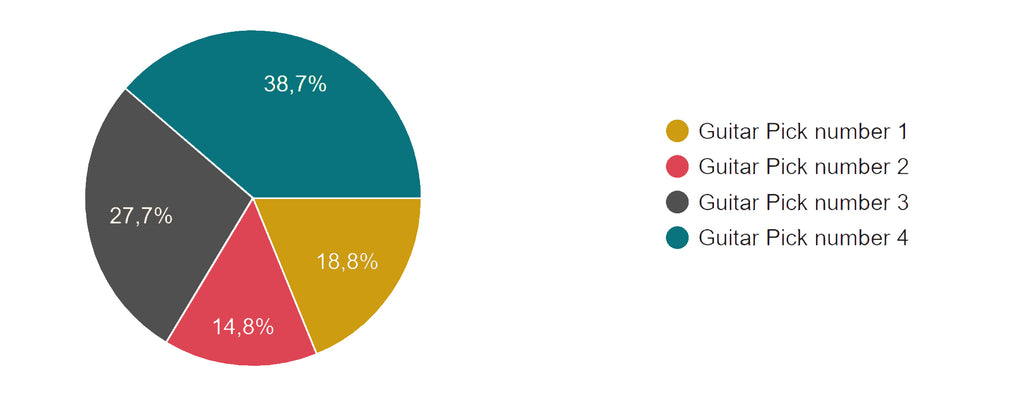
What is your favorite guitar pick design?
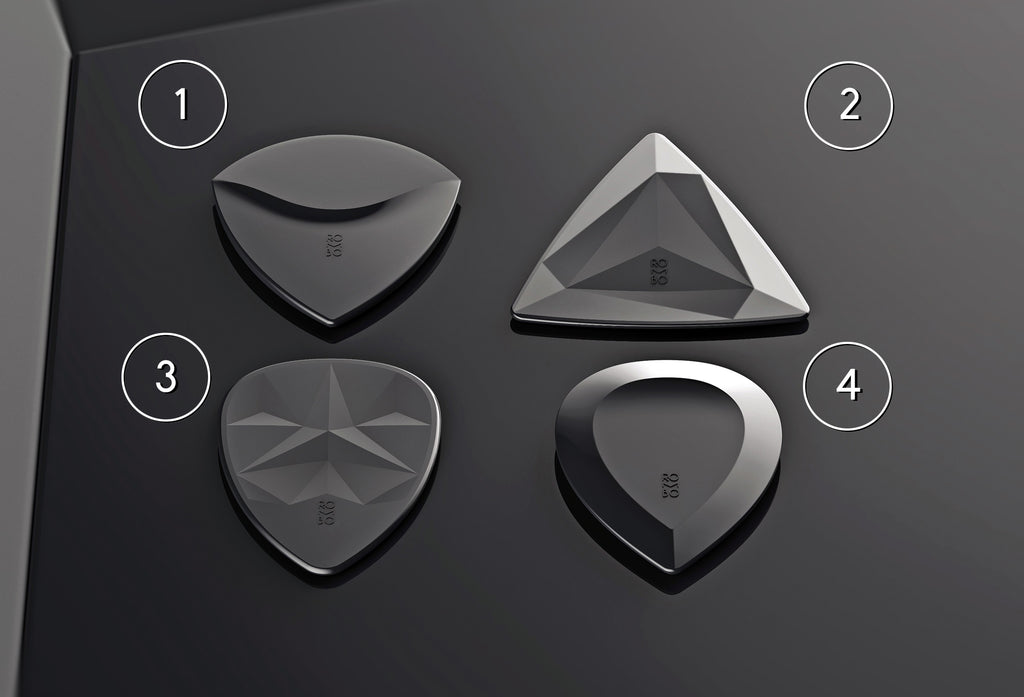
Pick number1: 18,8%
Pick number 2: 14,8%
Pick number 3: 27,8%
Pick number 4: 38,7%
Guitar Pick Number 1:
Name:
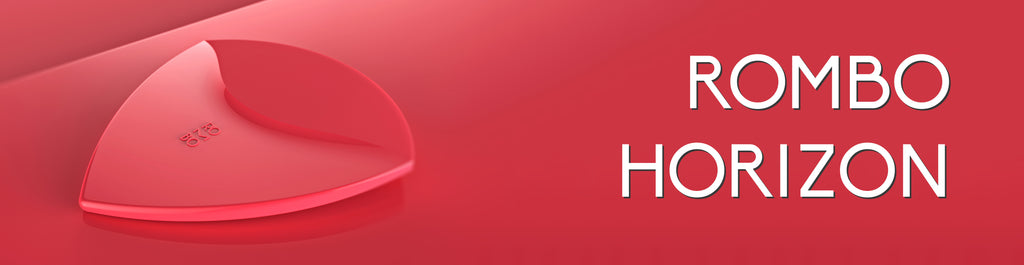
Rombo Horizon: 34,5%
Rombo Sense. 33,9%
Rombo Summit: 14,1%
Rombo Mood: 7%
Other names: 10,5%
Average Thickness: 1,378 mm
Average Size: Medium Size with 71% of the votes
Guitar Pick Number 2:
Name:
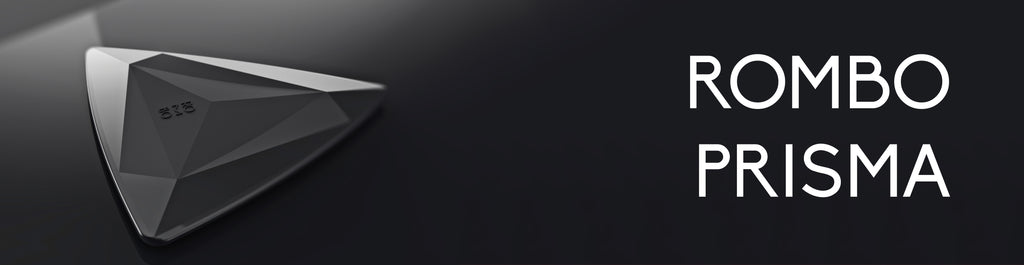
Rombo Prisma: 76%
Rombo Spin: 7,7%
Rombo Treble: 8,4%
Other names: 7,9%
Average Thickness: 0,831 mm
Average Size: Large Size with 73,5% of the votes
Guitar Pick Number 3:

Name:
Rombo Crisp: 47%
Rombo Split: 22,1%
Rombo Prisma: 16,4%
Other names: 14,5%
Average Thickness: 1,028 mm
Average Size: Medium Size with 59,7% of the votes
Guitar Pick Number 4:
Name:
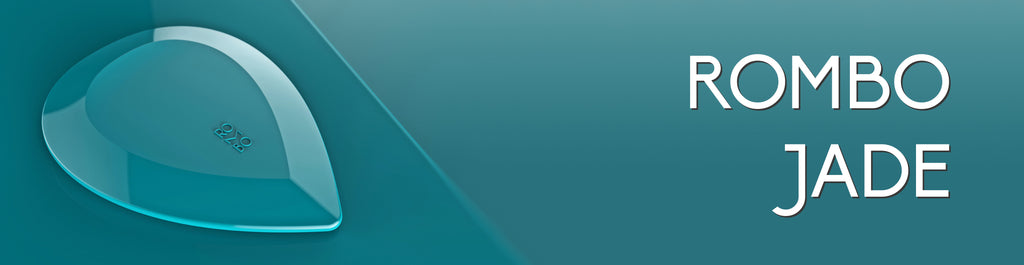
Rombo Jade: 33%
Rombo Shift: 17,6%
Rombo Slope: 12%
Rombo Summit: 10%
Rombo Dune: 7%
Rombo Cascade: 7%
Rombo Wizzard: 4,9%
Other names: 8,5%
Average Thickness: 2,37 mm
Average Size: Small Size with 56,6% of the votes
Guitar picks: Personal thoughts of 336 guitar players

A total of 336 people left us a private message regarding guitar picks.
We have read all of them carefully and we will use all this information during the development.
Here are the important questions we have received and our comments to them:
-
Will the guitar picks be available in new colors?
Not at the moment. However, we are thinking about creating some additional colors for special editions in the future.
-
Will they have the same grip structure?
Yes! Definitely. Lots of people have sent us e-mails and letters regarding the grip structure. With the micro-nodules, we have the advantage of medium-grip surfaces which add lots of control.
However, a very small number of people want the picks to have more grip. We had to make a decision here, and it was hard.
We won’t forget this topic: In the future, we want to develop a texture with more grip for these players.
-
Why don’t you create different guitar pick thicknesses for each one of the models?
We want every guitar pick to be unique. As every person has unique preferences, we believe every guitar pick should have its own design.
In the future, we hope to be able to create a bigger quantity of different plectrum designs to cover each possible necessity.
-
What about picks for bass players?
Most our picks are compatible with bass, as we have confirmed this with some bassists that are using them regularly, especially Rombo Diamond ad Rombo Origami. We explained this HERE.
-
You should create some merch, T-Shirts and other stuff:
Maybe in the future. Now, we want to focus 100% on the development of the guitar picks. Every minute we spend on the design of a T-Shirt will be taken away from the quality of the picks! ;)
-
Will you offer the EcoBlack range in other colors?
The EcoBlack material can only be produced in one color at the moment. The recycling process creates a very dark pigmentation. The industry is working hard to find a way to create new recycling processes. We hope we will manufacture all of our picks out of recycled material in the future.
When will be the new picks available?
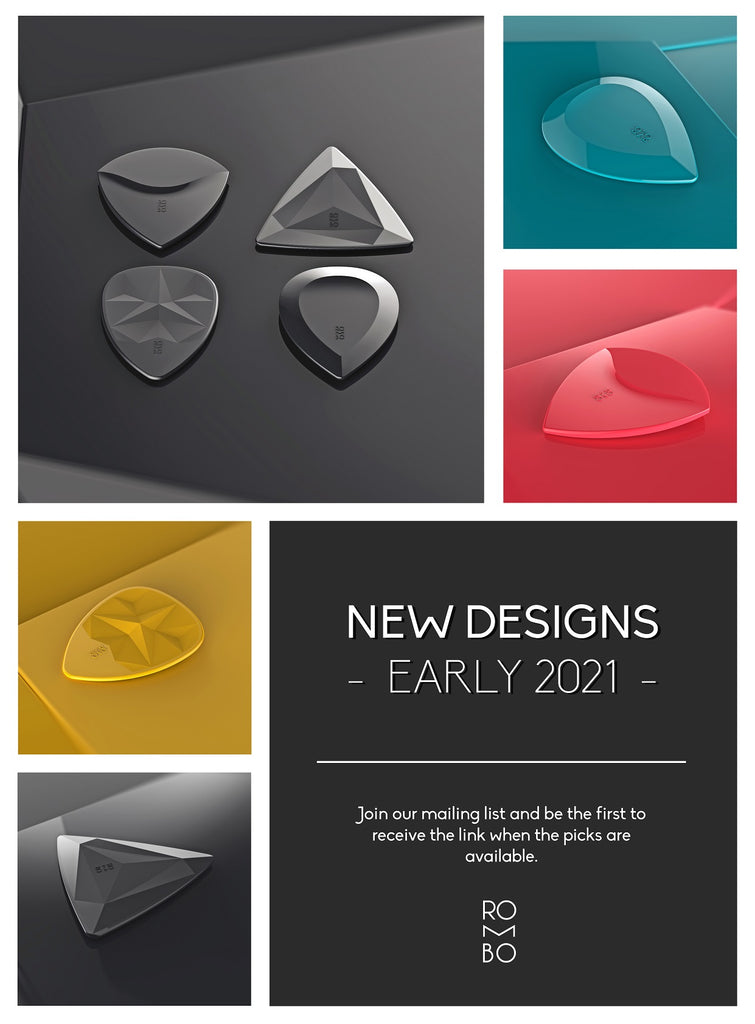
The new guitar picks will be available in early 2021.
If you want to receive an E-Mail as soon as the picks are availabe, join our mailing list below on the footer.
This is the timeline we created for this project:
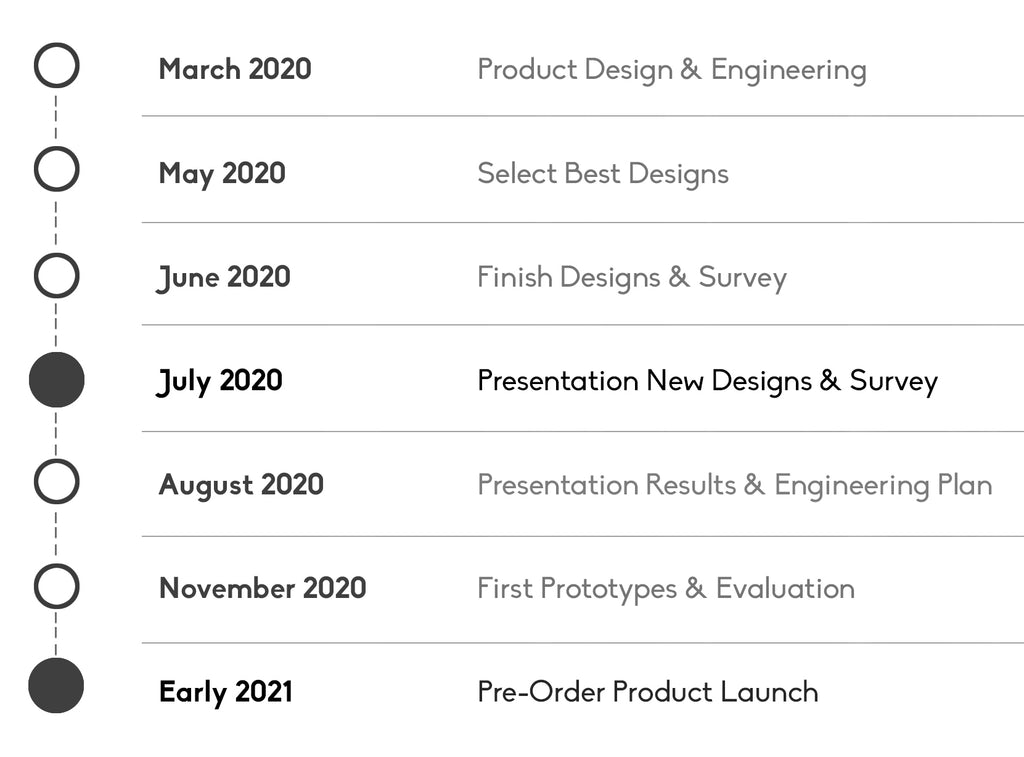
The pre-order product launch will be on the platform Kickstarter (like the first generation of Rombo guitar picks we launched in January 2019).
However, the current development of the Covid-19 could postpone the project a couple of months. We want to launch the product when we are able to deliver worldwide.
Why Kickstarter?
Kickstarter campaigns turn dreams and ideas into reality. Rombo is still a small start-up run by two people, and with limited access to resources. Through Kickstarter, we involve the community of guitar players, showing our guitar picks before launching.
This process brings us in contact with the real guitar players and their necessities. It forces us to remain flexible, accept changes, and challenges us to create new designs to fulfill the expectations of our audience.
We love open and critical criticism, and this is the best place to get it, where all comments and thoughts are visible. By sharing your experiences, we can listen to your needs and wishes, and create guitar picks that make a difference.

So wählst du das richtige Plektrum in 4 Schritten aus
Was sind Gitarrenpicks?
Gitarrenplektren sind die Brücke zwischen dir und deinem Instrument. Ein versteckter Held in den Händen von Gitarristen.
Ein Plektrum ist ein sehr persönlicher Gegenstand und die Wahl des besten hängt von mehreren Faktoren ab. Es gibt kein magisches Plektrum, aber jeder wird sich mit einem Plektrummodell anfreunden, den er mag und genießt.
Um das richtige Plektrum auszuwählen, müsst du einige sehr grundlegende Konzepte verstehen.

Welchen Unterschied kann ein Gitarrenplektrum wirklich machen?
Das Plektrum beeinflusst nicht nur Ton und Technik, sondern auch andere Aspekte wie Attack (die Art und Weise, wie dein Plektrum auf die Gitarrensaiten trifft) und Ergonomie (die Kontrolle, die es während der Übergänge zwischen den Saiten bietet).
Das Verständnis einiger Grundregeln ist bei der Auswahl des richtigen Plektrums unerlässlich:
SO WÄHLST DU DAS RICHTIGE PLEKTRUM
1- Form des Plektrums
Die Form der Spitze ist ein Faktor, den die Spieler oft übersehen. Die meisten Menschen werden dazu neigen, sich nie von der Standardform zu entfernen, die wir alle kennen und lieben. Die Form des Plektrums beeinflusst, wie einfach es zu halten ist und wie genau Sie mit Ihrem Picken umgehen können.
Helle Töne werden mit einer spitzen Spitze erzielt, warme und weniger definierte Töne werden von Plektren mit abgerundeter Spitze erzeugt (wie in der Abbildung unten zu sehen).

Extra-Tipp: Zusätzlich kann eine abgeschrägte Kante (beveled edge) an der Spitze mit abgerundeten Kanten dazu beitragen, eine gleichmäßigere Saitenreibung zu erzeugen, was zu effizienteren Schlägen und Geschwindigkeit führt.
2- Dicke des Plektrums
Die Dicke deines Pleks ist der wichtigste Teil davon, wie hell oder wie warm die Gitarre klingt. Wie bei allem haben die verschiedenen Optionen für die Dicke des Plektrums jeweils ihre eigenen Vor- und Nachteile.
Die Dicke eines Plektrums hat auch den größten Einfluss auf die Flexibilität (wie in der Abbildung unten zu sehen).

Die Dicke von Gitarrenplektren wird im Allgemeinen in Millimetern (mm) gemessen und die Bereiche variieren stark je nach Marke und Musikstil:
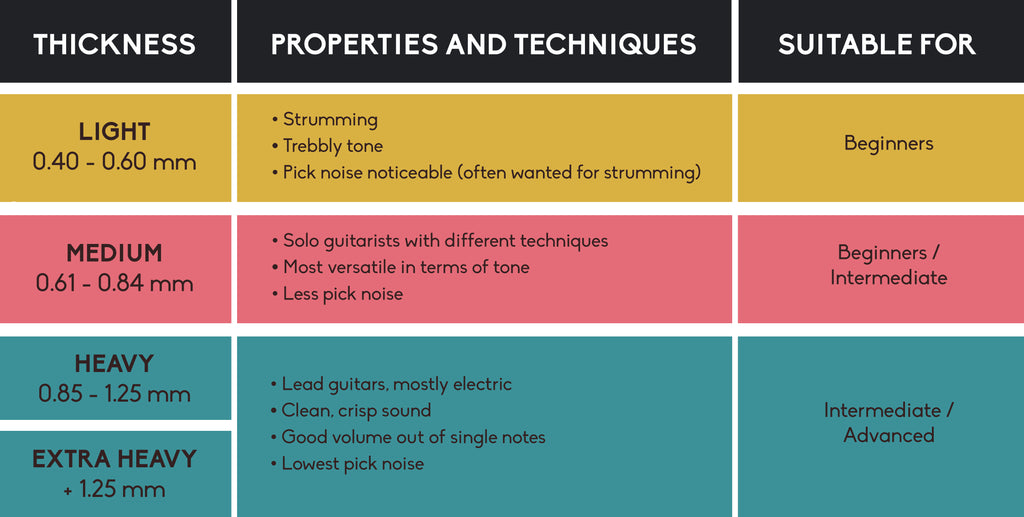
Dünne Plektren:
Gut für Rhythmusgitarre, aber nicht so toll für Leadgitarre wegen der fehlenden Kontrolle beim Spielen einzelner Noten. Es biegt sich leicht, wenn es mit den Saiten in Kontakt kommt, und ist ideal für Anfänger. Es liefert immer einen Sound, der flüssig erscheint.
Mittlere Auswahl:
Die vielseitigsten Gitarrenplektren und perfekt für Sologitarristen, die verschiedene Techniken in denselben Songs verwenden (Strumming, Solo, Palm Mute usw.…). Sie kombinieren Komfort, Präzision, Rhythmus und Spielgeschwindigkeit.
Dicke Plektren:
Dicke Plektren geben dem Gitarristen mehr Kontrolle über die Lautstärke und den Attack auf die Saiten. Favorit unter fortgeschrittenen Gitarristen. Die Leute entscheiden sich für diese Art von Dicke, weil sie Präzision für ihr Spiel auf hohem Niveau und ihre Soli-Parts benötigen. Garantierte Spielgeschwindigkeit!
Extra-Tipp: Einige Plektren mit variabler Dicke (unterschiedliche Dicken im Haltebereich und Angriffsbereich) können helfen, diese Eigenschaften zu kombinieren, indem sie einen starren Körper und eine dünnere, flexiblere Spitze bieten.
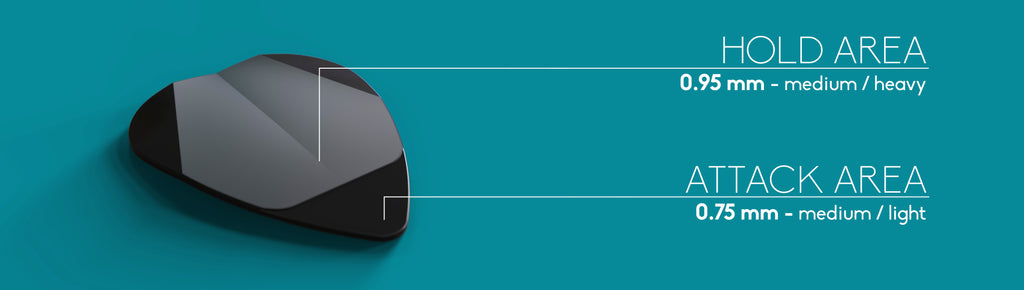
3- Die Gesamtgröße des Plektrums
Die Größe des Picks ist der größte Faktor bei der Betrachtung des Komforts. Dies ist bei jedem individuell, weil niemand gleich ist. Außerdem ist dieser Punkt eng mit der Form des Plektrums verbunden.
Du wirst vielleicht feststellen, dass kleine Plektren leichter fürs Shredding sind und mehr Geschwindigkeit erzeugen. Deine Finger sind näher an den Saiten und du spürst besser, was du spielst. Der Nachteil dieser Picks ist, dass sie leicht fallen gelassen werden können, da sie kleiner sind.
Du könntest auch feststellen, dass größere Picks einfacher zu halten sind und sich komfortabel anfühlen. Experimentiere mit verschiedenen Größen und verwende, was für dich am bequemsten ist.
Normalerweise variiert die Größe zwischen 15 und 40 mm (wie in der Abbildung unten zu sehen).

Einige Gitarristen bevorzugen große Plektren, weil sie durch die Vergrößerung der Kontaktflächen einen besseren Halt bekommen.
4- Materialien und Texturen für Gitarrenpicks
Gitarrenplektren können wirklich aus allem hergestellt werden. In der Vergangenheit wurden einige exotische Materialien zur Herstellung von Gitarrenplektren verwendet.
Die technologische Welle hochspezialisierter Polymere hat eine neue Ära von Materialien mit erstaunlichen Eigenschaften geschaffen. Normalerweise sind dies die Haupteigenschaften, die ein gutes Material haben sollte:
- Hohe mechanische Festigkeit und Steifigkeit
- Hervorragende Schlagfestigkeit
- Hervorragende ästhetische Eigenschaften
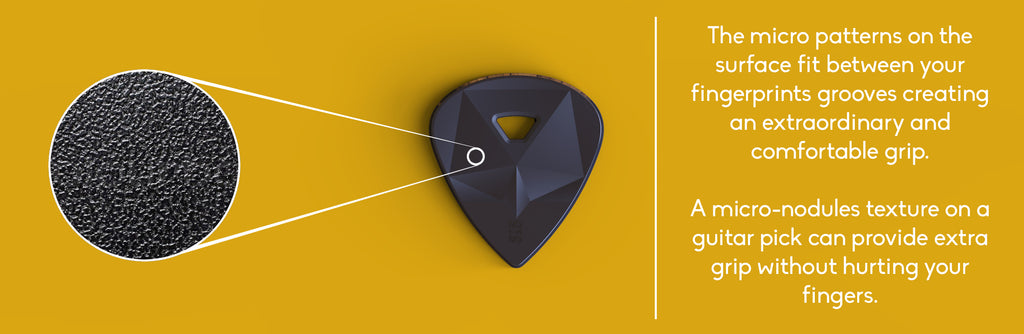
Extra-Tipp: Grifftexturen hängen auch vom Material ab. Eine Mikronoppenstruktur auf einem Plektrum kann zusätzlichen Halt bieten, ohne die Finger zu verletzen. Mehr dazu in unserem Artikel „Warum Texturen auf Plektrumoberflächen dein Spielerlebnis verbessern kann“
Zusammenfassung:
Der einzige Weg, um dein Plektrum wirklich zu finden, besteht darin, einige Zeit damit zu verbringen, neue Formen, Materialien und Größen auszuprobieren. Manchmal ändern sich deine Bedürfnisse als Gitarrist mit der Zeit. Die Wahl, die du zu Beginn deiner Karriere getroffen hast, ist möglicherweise nicht die, die du jetzt für dein Spiel benötigst.
Die Entwicklung deiner Fähigkeiten bedeutet auch, sich an neue Umgebungen anzupassen. Es ist bewiesen, dass das Spielen mit neuen Gitarren und neuen Gitarrenpicks helfen kann, deine allgemeinen Fähigkeiten zu entwickeln und dein Gehirn flexibel zu halten, wodurch es zu einem kontinuierlichen Lernen wird. Keine Angst vor Abwechslung.
PS: Hast du darüber nachgedacht, recycelte Materialien zu verwenden? Erfahre mehr in unserem Artikel: „Rombo stellt neue „Eco-Black Range“-Gitarren-Pick-Modelle vor“