



The Top 6 Best-Selling Guitar Picks from 6 Years of Rombo Picks (And Why Guitarists Love Them)
The Top 6 Best-Selling Guitar Picks from 6 Years of Rombo Picks (And Why Guitarists Love Them)
After six exciting years of designing, testing, and shipping high-quality guitar picks around the world, we’ve learned a lot about what guitarists truly value. From jazz players to metal shredders, beginners to professionals — certain picks consistently rise to the top.
In this article, we’re celebrating our top 6 best-selling guitar picks, based on real customer preferences, playing styles, and thousands of reviews. Whether you’re looking for precision, versatility, warmth, or speed, there’s something here for every guitarist.

We’ll also share how these picks evolved, how we determined their popularity, and help you figure out which one might be right for your style. If you’re curious about how shape, thickness, material, and grip influence your playing — this guide has it all.
Our Journey: 6 Years of Listening to Guitarists
Rombo Picks was born from a deep obsession with design and the belief that guitar picks deserved more innovation. Since day one, we’ve been testing materials, studying ergonomics, and gathering insights from thousands of guitarists around the world.
Over the past six years, these insights have shaped every design decision. The picks on this list aren’t just best-sellers — they’re symbols of how far we’ve come in understanding what players want in their hands.
Let’s dive into the top 6 picks, why they stand out, and what real musicians have to say about them.
1. Rombo Diamond — Precision and Power for Advanced Players
Why It’s a Bestseller
The Rombo Diamond has been our best-selling pick for years. With a sharp, focused tip and a sturdy 2.00 mm thickness, it delivers incredible precision and fast response. It’s engineered for technical players who rely on accuracy and speed, but also want power and volume.
Ideal For:
-
Fast alternate picking
-
Shredding and solos
-
Djent and technical metal (we call it the palm mute master!)

Playing Feel
The pointed shape gives a tight, precise attack. Players describe it as “gliding through strings with minimal resistance.” Despite its stiffness, it feels natural thanks to beveled edges and a textured grip.
The tone is dark, direct, percussive, and focused — ideal for cutting through a mix. Its full-body shape adds depth and enhances low-end frequencies.
Common Reviews:
-
“Best pick I’ve ever used for fast picking.”
-
“It feels like a scalpel for your tone — ultra precise.”
-
“I use it for both solos and tight rhythm parts. It’s super stable.”
Behind the Design
This pick was designed for advanced players looking for full control. Its geometry, grip pattern, and material blend make it one of our most complex, feedback-driven designs.
2. Rombo Origami — The Ultimate All-Rounder
Why It’s a Bestseller
Origami stands out for its adaptability. Inspired by folded paper structures, its ergonomic shape offers a natural grip that suits nearly every genre. With mid-range thickness and moderate flex, it balances comfort and articulation.
It also showcases our innovation in grip design: The folded surfaces prevent rotation, providing extra stability.
Ideal For:
-
Strumming and arpeggios
-
Blues leads, pop, and rock riffs
-
Players who switch styles frequently
-
Warm tones on acoustic guitar

Playing Feel
The surface texture is subtle but secure. It feels balanced — neither too thick nor too light. Whether you’re strumming chords or picking melodies, it responds with warmth and clarity. The rounded tip reduces string noise while keeping note definition.
The variable thickness (a thicker body tapering to a thinner tip) helps preserve bass tones and reduce that annoying click-clack sound on acoustic guitars.
Common Reviews:
-
“It’s the pick I reach for when I don’t know what style I’ll play.”
-
“Great for both acoustic and electric.”
-
“Super comfortable. I never drop it.”
Why It Matters
Every guitarist needs a workhorse pick, and Origami is ours. Its design isn’t extreme in any one direction — and that’s exactly why it works so well.
3. Rombo Horizon — Elegance Meets Performance
Why It’s a Bestseller
Horizon blends classic elements with modern engineering. A bit thinner than the Diamond, with a super-curved tip and elegant silhouette, it’s a favorite for players who want clean articulation without harshness.
Ideal For:
-
Funk and jazz fusion
-
Sweep picking
-
Riffs that demand clarity (metal and rock included)

Playing Feel
Horizon delivers controlled brightness. The tone is clean and expressive, with just enough edge for fast passages. Its surface geometry enhances grip, while the beveled edges allow subtle dynamic shifts.
It’s designed to feel effortless — and yes, it’s my personal favorite, and the design I’m most proud of.
Common Reviews:
-
“The clearest attack I’ve ever had.”
-
“My go-to for funk rhythm and jazzy leads.”
-
“A great compromise between flexibility and control.”
The Experience
Horizon is the kind of pick that reveals its strengths over time. Surgical, reliable, and deeply satisfying.
4. Rombo Shell — A Refined Jazz III Alternative
Why It’s a Bestseller
Small, sharp, and punchy — Rombo Shell is our tribute to the Jazz III, reimagined with better grip and more comfort. Designed for speed and control, it stays securely in your fingers, even during intense play.
Ideal For:
-
Solos
-
Funk comping
-
Fast melodic playing (metal, rock, fusion)

Playing Feel
Shell offers surgical precision in a compact size. The tip is sharp, and the grip is firm. Many describe it as an extension of the fingers — perfect for speed-focused genres.
Common Reviews:
-
“It’s like a Jazz III but better in every way.”
-
“So fast, but still feels controlled.”
-
“My favorite pick for complex jazz lines.”
Design Insight
We preserved the classic jazz-style tip but enhanced the grip and ergonomics. For fans of small picks and fast play, Shell is a game-changer.
5. Rombo Classic — Warm, Familiar, and Beginner-Friendly
Why It’s a Bestseller
Rombo Classic is our most traditional pick. With a slightly flexible 0.38 mm profile and soft texture, it’s ideal for strumming and dynamic acoustic playing.
Ideal For:
-
Acoustic guitar
-
Folk and singer-songwriter styles
-
Beginners and casual players

Playing Feel
It feels light and familiar, with a warm and rounded attack. The soft grip prevents slips without distracting from your playing experience.
Common Reviews:
-
“Reminds me of old-school picks, but better.”
-
“My students always prefer this one.”
-
“Perfect for acoustic gigs.”
Why It’s Essential
Not everyone needs an aggressive or technical pick. Classic offers an easy entry into modern pick ergonomics — without overwhelming new players.
6. Rombo Prisma — Designed for Bass and Low Tunings (But Loved by Guitarists Too)
Why It’s a Bestseller
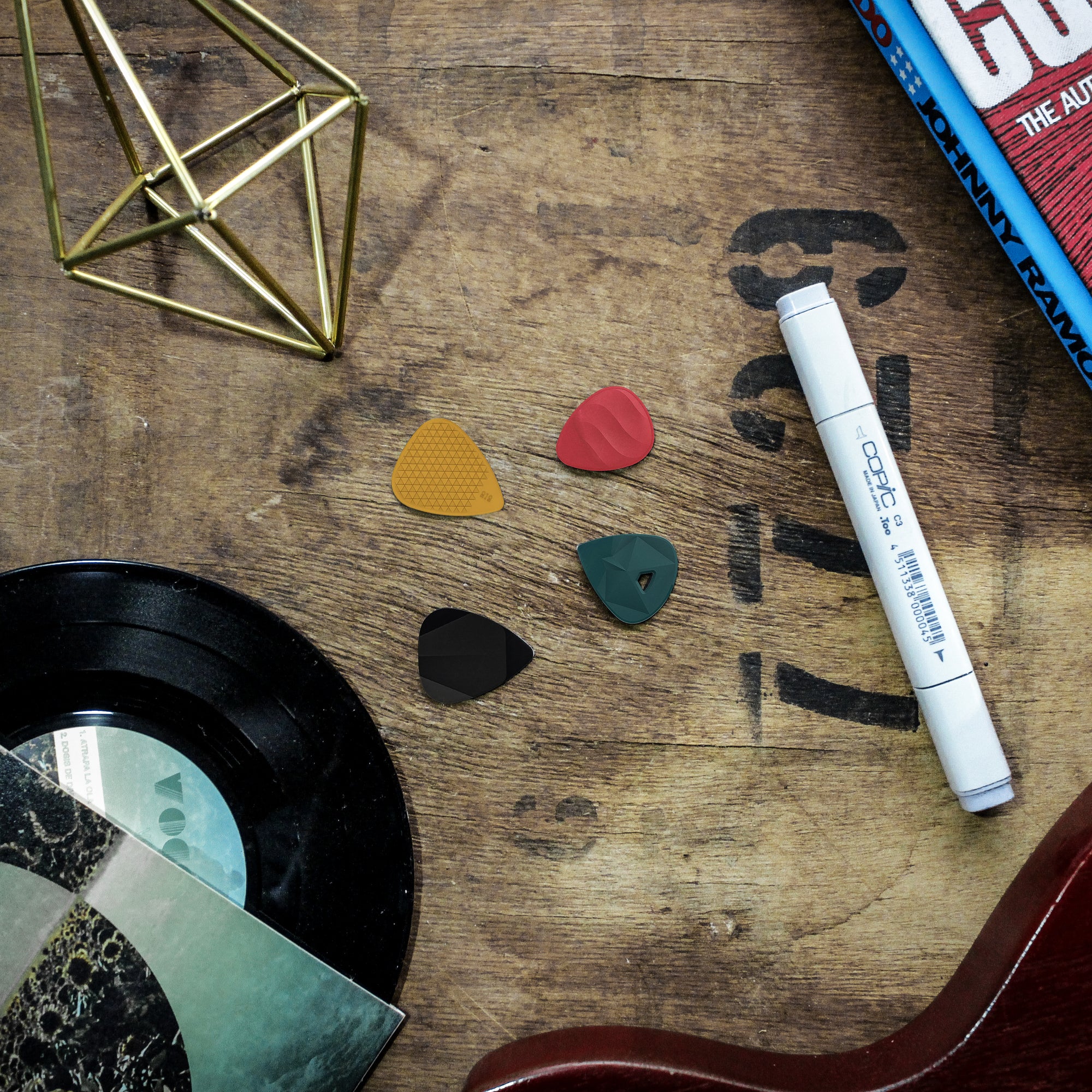
Prisma was originally designed for bass — but it quickly became a favorite among guitarists playing heavy, low-tuned music. Its thick profile and broad tip deliver power and control.
Ideal For:
-
Bass guitar (all styles)
-
Metal and drop tunings
-
Players who want a large, pointy, powerful pick

Playing Feel
Thick, textured, and grippy, Prisma provides a confident, punchy attack. Players say it adds weight and depth to their tone and helps lock in a solid rhythm.
Common Reviews:
-
“Perfect pick for bass — finally.”
-
“I use it on baritone guitar. The control is unreal.”
-
“Heavy pick for heavy tones.”
Design Insight
We included 3D shapes and curved edges to increase mass while maintaining flexibility. Combined with a very sharp tip, Prisma produces bright tones while preserving the round warmth you'd expect from a heavier pick.
How We Determined These Top 6 Picks
This list is based on:
-
Sales data from the last six years
-
Review volume and sentiment
-
Return purchases and customer loyalty
-
Direct feedback from our community
Each pick earned its place through performance, popularity, and long-term player satisfaction.
How to Choose the Right Guitar Pick: A Complete Guide
1. Understand Your Playing Style
Fast soloist? Go firm and sharp.
Strumming chords? Try something thinner and flexible.
2. Explore Pick Thickness
-
Thin (<0.55 mm): Brighter sound, ideal for strumming
-
Medium (0.55–1 mm): Balanced tone and feel
-
Thick (1–2.5 mm): Great for precision and heavy styles

3. Pick Shape and Size
-
Small picks: Control and speed
-
Large picks: Easier grip, especially for big hands
-
Sharp tips: Precision
-
Rounded tips: Warmth

4. Material and Surface Texture
-
Hard materials (e.g., CrystalBright): Bright, snappy tone
-
Softer materials: Warm tones, smooth feel
Tone can also be greatly influenced by shape and size. For example, a pick made from soft materials can sound brighter if it is pointy and thin.
Grip texture, 3D geometries, and variable thickness help prevent slips and enhance comfort — features we’ve heavily innovated at Rombo.

5. Try Before You Decide
Most players find their ideal pick only after trying several. That’s why we offer Variety Packs — so you can explore freely.
6. Factor in Genre and Instrument
-
Metal/Prog: Thick, sharp picks
-
Jazz: Small, smooth picks
-
Acoustic: Medium or thin, rounded picks
-
Bass: Thick, textured picks
(But of course — rules are meant to be broken.)
7. Ergonomics and Comfort
Comfort isn’t cosmetic. A well-designed pick reduces fatigue, increases precision, and makes you a better player.
Still Not Sure? Try Them All.
The best way to find your ideal pick is to experiment.
🎸 Try our Rombo Variety Pack to explore every shape and material.
👉 Use our Rombo Guitar Pick Finder Tool to get personalized recommendations based on your style and preferences.

PIcture by @brandon.delgadoe
Final Thoughts
Each of these picks represents a different type of player — and a different chapter of our Rombo journey. Whether you're discovering us for the first time or have been with us from the start, we hope this guide helps you find your perfect match.
From classic silhouettes to futuristic contours, every Rombo pick is built with care, feedback, and inspiration.
Thanks for being part of our story.
— The Rombo Picks Team


The Problem With Standard Guitar Picks: Why a New Approach Matters
When you think about essential tools for guitar players, picks—small, simple, and often overlooked—rarely get the attention they deserve. Yet this tiny piece of gear has a profound impact on a guitarist’s tone, speed, dynamics, and comfort.

Since the 1960s, the world of guitar picks has been largely defined by one dimension: thickness. It was during this era, particularly through innovations popularized by Jim Dunlop, that the concept of standardizing picks based on thickness took root.
And while that was an important step at the time, focusing only on thickness ignored a much bigger picture—a picture that has only become more complex with the evolution of music itself.
How Standardization Limited Guitar Picks
Back in the 60s, popular genres like blues, folk, and early rock 'n' roll dominated the airwaves. Players needed basic, reliable tools, and a simple pick thickness classification was an easy solution.

However, when manufacturers zeroed in on thickness alone, other critical elements of guitar pick design became secondary. Important factors like:
-
Material (affecting grip and tone),
-
Tip shape (impacting precision and speed),
-
Overall size (affecting comfort, control and tone),
-
Body shape (influencing ergonomics and attack),
-
Surface texture (enhancing comfort),
...were often treated as afterthoughts.
This "one-size-fits-all" approach worked well enough—for a time. But it didn’t anticipate the explosion of new playing styles, techniques, and genres that were just around the corner.

New Music Demands New Tools
Think about the musical landscape today compared to the 1960s. In those days, there was no thrash metal, no shred guitar techniques, no punk rock anthems, no hyper-produced modern pop songs. Today’s guitarists face challenges that players 60 years ago could not have imagined.

We now have styles that demand:
-
Extreme speed and precision (like shredding or sweep picking),
-
Aggressive and rhythmic strumming (seen in punk or alternative rock),
-
Nuanced dynamic control (essential in modern pop, R&B, and fingerstyle genres),
-
Highly technical solos requiring picks that can glide effortlessly across strings.
In other words, today's players need picks designed for specific techniques, tones, and comfort needs—not just a slightly thicker or thinner version of the same old pick.
Rethinking the Guitar Pick: The Rombo Approach
At Rombo Picks, we saw this gap clearly. Founded by two passionate guitar players, Rombo is about rethinking everything you thought you knew about guitar picks.

We believe that a guitar pick is not just a piece of plastic—it's an extension of your fingers, your style, and your voice as a musician. That’s why we’ve developed 12 unique guitar pick shapes, each designed thoughtfully for different playing styles and preferences.

Some of the key innovations that set Rombo Picks apart include:
-
3D Ergonomic Design: Each pick is sculpted for natural finger placement, reducing hand fatigue during long sessions and increasing the total mass of the pick reducing treble and pick noise.
-
Micro-Nodule Grip Structure: A unique surface texture that enhances grip without being abrasive.
-
High-Mirror Polished Tips: For ultra-smooth string release, allowing for faster and more precise playing and clearer tones.
-
Variety of Materials: Including sustainable materials like our EcoBlack line or CrystalBright
-
Tailored Sizes and Thicknesses: We don’t believe in one-size-fits-all. Our picks come in a range of thicknesses, shapes, and sizes, each fine-tuned for a specific feel and response.
Whether you’re a fast lead guitarist, an aggressive rhythm player, a nuanced fingerstyle artist, or a beginner exploring different styles, there's a Rombo pick designed with your specific needs in mind.

Why Material and Shape Matter
Many guitarists don’t realize how much pick material influences tone. Softer materials can create a warmer sound, while harder materials bring out a brighter, more articulate tone.
Similarly, tip shape can completely change your playing experience:
-
Sharp tips provide incredible precision for solos and fast passages.
-
Rounded tips are perfect for smooth strumming and a softer, more mellow sound.
Size matters too—larger picks give you better control and are easier to hold, while smaller picks can offer greater agility and speed.
At Rombo, we embrace the complexity. We celebrate the idea that every player’s needs are different—and that’s something a standard medium-thick pick could never fully address.
The Future of Guitar Picks is Personal
The days of picking a "standard" guitar pick off the rack without a second thought are behind us. Guitarists today deserve more—more comfort, more precision, more choice.
At Rombo, we believe that the guitar pick of the future is not standardized—it’s personalized.
This is why we offer not just one or two shapes, but a full collection designed to match the diverse needs of modern players. With Rombo, you can find the perfect pick for shredding, strumming, sweeping, tapping, or whatever new technique you invent tomorrow.
Because when your pick feels right, your music feels right.
Find Your Perfect Pick
Ready to discover the difference a truly modern pick can make? Explore the Rombo collection today and find the pick that matches your playing style, tone, and passion.

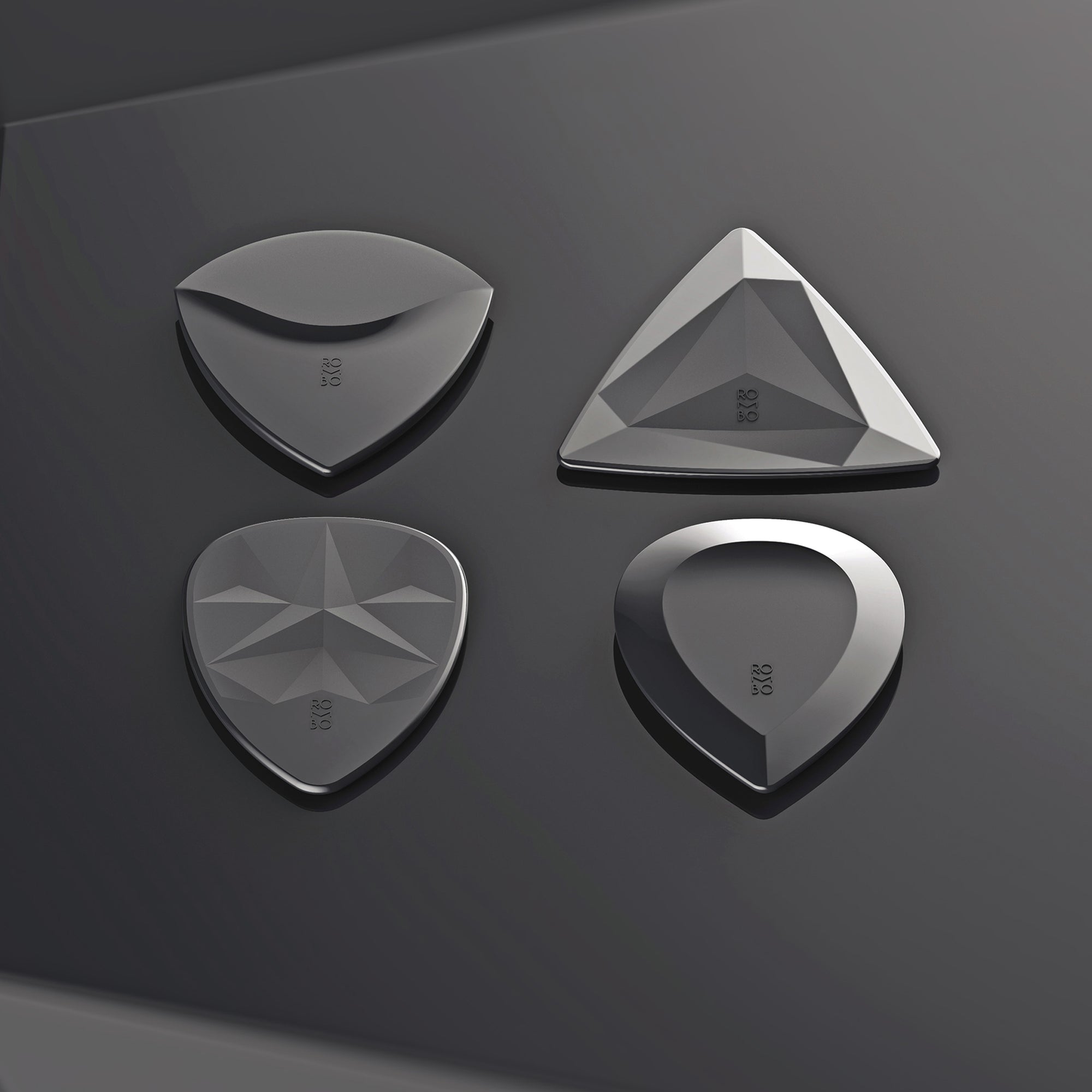
Nuevas púas de guitarra para 2021: cómo más de 1500 guitarristas nos ayudaron a codiseñar nuestras púas de guitarra:
En mayo de 2020, Judith y yo terminamos los primeros bocetos en 3D de nuestros cuatro nuevos modelos de púas de guitarra. Sin embargo, las selecciones no estaban 100% listas.
El grosor, el tamaño e incluso los nombres de los picos aún no estaban definidos.
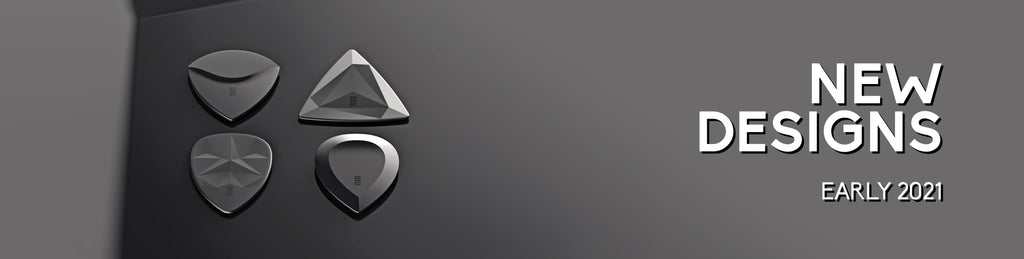
Decidimos adoptar un nuevo enfoque e involucrar a tantos guitarristas como fuera posible para ayudarnos a co-crear nuestras nuevas púas de guitarra.

¿Qué es una púa de guitarra de firma?
Las púas de guitarra Signature son comunes en el mundo de las púas de guitarra.
Estas púas se desarrollaron con la ayuda de algunos guitarristas expertos y famosos de un campo musical específico.
Desde nuestro punto de vista, este es un camino de diseño muy estrecho que solo considera la opinión y el estilo de tocar la guitarra de una persona.
Nuestro enfoque: Lo opuesto a una selección exclusiva:
La comunidad de guitarristas ha apoyado firmemente a Rombopicks desde sus inicios en 2019.
No queríamos crear nuevas púas de guitarra sin preguntar a las personas que han estado con nosotros desde el principio. Ustedes, chicos y chicas, son el núcleo de Rombo y deben decidir qué productos desarrollamos.
El paso más lógico fue crear una gran encuesta para permitir a los usuarios decirnos cómo prefieren sus púas de guitarra.
Creemos que esta es la única forma de desarrollar nuestras púas de guitarra, en función de los deseos de nuestros usuarios, lo que nos permite tomar decisiones esenciales sobre la dirección de nuestra empresa.

Esto solo es posible escuchando los pensamientos de cada guitarrista.
Además, al hacer preguntas precisas sobre las púas de guitarra, podemos crear más conciencia sobre temas complejos, como: ¿ Por qué las púas de guitarra son gruesas o delgadas? ¿Cómo se comportan cuando cambia el tamaño? ¿La flexibilidad de una púa de guitarra afecta el tono? ¿Qué pasa con el material?
Cuando el usuario conoce las características del producto, puede emitir un voto útil.
Desde el principio, hemos estado investigando todas estas áreas y las estamos compartiendo con usted. Con cada artículo que hemos escrito sobre púas, hemos contribuido al conocimiento que tienes sobre tu equipo para que puedas decidir qué equipo es el mejor para ti y entender por qué.
Los resultados de la encuesta:
Participantes:
1.552 guitarristas (incluidos nosotros) han participado en la encuesta y por tanto han tomado parte en el proceso de diseño de estas nuevas púas de guitarra para 2021.
336 de ellos dejaron un mensaje privado con información detallada.

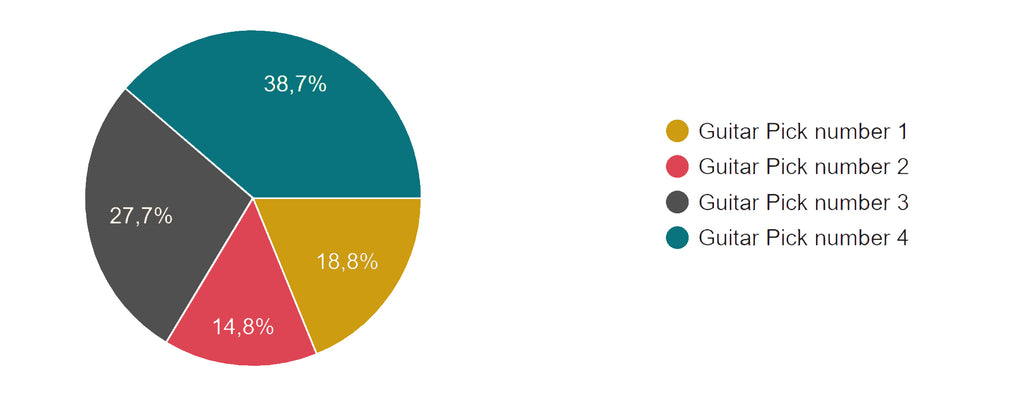
¿Cuál es tu diseño de púa de guitarra favorito?
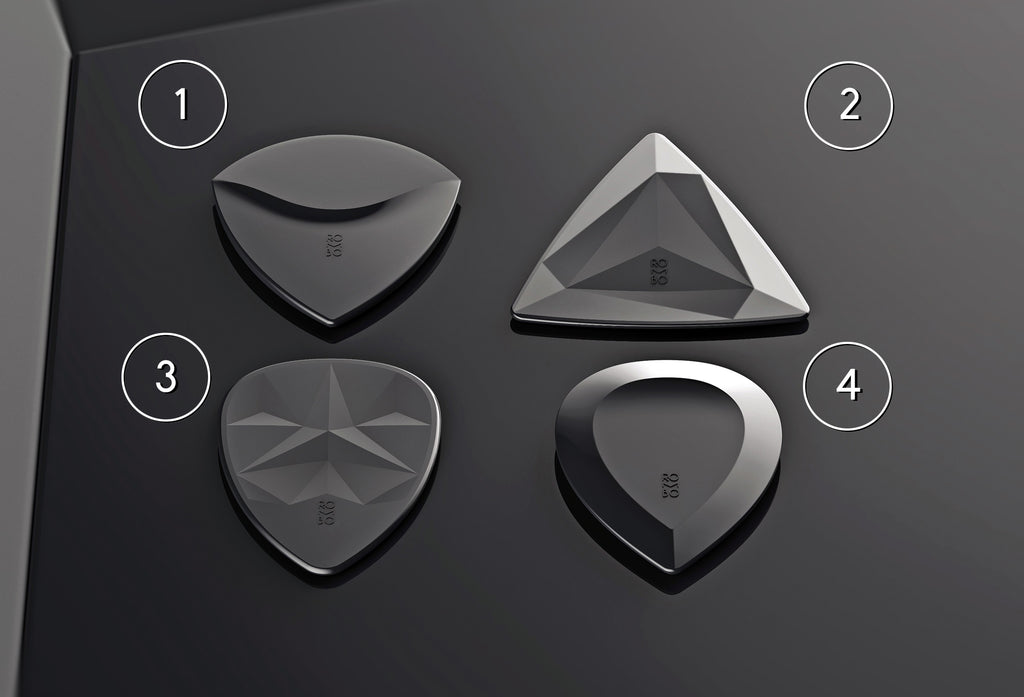
Pick número1: 18,8%
Pick número 2: 14,8%
Pick número 3: 27,8%
Pick número 4: 38,7%
Púa de guitarra número 1:

Nombre:
Rombo Horizonte: 34,5%
Sentido Rombo. 33,9%
Cumbre Rombo: 14,1%
Estado de ánimo Rombo: 7%
Otros nombres: 10,5%
Espesor medio : 1.378 mm
Tamaño Promedio : Tamaño Mediano con 71% de los votos
Púa de guitarra número 2:
Nombre:
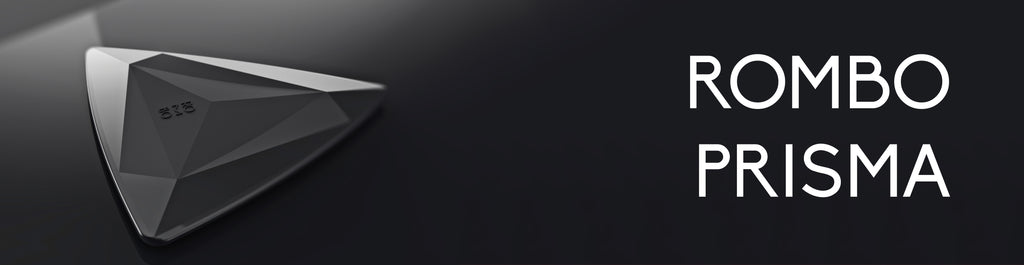
Rombo Prisma: 76%
Giro Rombo: 7,7%
Rombo Agudos: 8,4%
Otros nombres: 7,9%
Espesor medio : 0,831 mm
Tamaño Medio : Tamaño Grande con 73,5% de los votos
Púa de guitarra número 3:

Nombre:
Crujiente Rombo: 47%
Partición Rombo: 22,1%
Rombo Prisma: 16,4%
Otros nombres: 14,5%
Espesor medio : 1.028 mm
Tamaño Promedio : Tamaño Mediano con 59,7% de los votos
Púa de guitarra número 4:

Nombre:
Rombo Jade: 33%
Cambio Rombo: 17,6%
Pendiente Rombo: 12%
Cumbre Rombo: 10%
Duna Rombo: 7%
Cascada Rombo: 7%
Rombo Mago: 4,9%
Otros nombres: 8,5%
Espesor medio : 2,37 mm
Tamaño Medio : Tamaño Pequeño con 56,6% de los votos
Púas de guitarra: Pensamientos personales de 336 guitarristas

Un total de 336 personas nos dejaron un mensaje privado sobre púas de guitarra.
Los hemos leído todos detenidamente y utilizaremos toda esta información durante el desarrollo.
Estas son las preguntas importantes que hemos recibido y nuestros comentarios a ellas:
-
¿Estarán disponibles las púas de guitarra en nuevos colores?
No en este momento. Sin embargo, estamos pensando en crear algunos colores adicionales para ediciones especiales en el futuro.
-
¿Tendrán la misma estructura de agarre?
¡Sí! Definitivamente. Muchas personas nos han enviado correos electrónicos y cartas con respecto a la estructura de la empuñadura. Con los micronódulos, tenemos la ventaja de superficies de agarre medio que añaden mucho control.
Sin embargo, un número muy pequeño de personas quiere que las púas tengan más agarre. Tuvimos que tomar una decisión aquí, y fue difícil.
No olvidaremos este tema: en el futuro, queremos desarrollar una textura con más agarre para estos jugadores.
-
¿Por qué no creas diferentes grosores de púas para cada uno de los modelos?
Queremos que cada púa de guitarra sea única. Como cada persona tiene preferencias únicas, creemos que cada púa de guitarra debe tener su propio diseño.
En el futuro, esperamos poder crear una mayor cantidad de diseños de plectro diferentes para cubrir cada necesidad posible.
-
¿Qué hay de las púas para bajistas?
La mayoría de nuestras púas son compatibles con el bajo, como lo hemos confirmado con algunos bajistas que las usan regularmente, especialmente Rombo Diamond y Rombo Origami. Te lo explicamos AQUÍ.
-
Deberías crear algo de merchandising, camisetas y otras cosas:
Quizás en el futuro. Ahora, queremos centrarnos al 100% en el desarrollo de las púas de guitarra. ¡Cada minuto que dediquemos al diseño de una camiseta se restará a la calidad de las selecciones! ;)
-
¿Ofrecerán la gama EcoBlack en otros colores?
El material EcoBlack solo se puede producir en un color por el momento. El proceso de reciclaje crea una pigmentación muy oscura. La industria está trabajando duro para encontrar una manera de crear nuevos procesos de reciclaje. Esperamos fabricar todas nuestras púas con material reciclado en el futuro.
¿Cuándo estarán disponibles las nuevas selecciones?

Las nuevas púas de guitarra estarán disponibles a principios de 2021.
Si desea recibir un correo electrónico tan pronto como las selecciones estén disponibles, únase a nuestra lista de correo a continuación en el pie de página.
Esta es la línea de tiempo que creamos para este proyecto:

El lanzamiento del producto de pedido anticipado será en la plataforma Kickstarter (como la primera generación de púas de guitarra Rombo que lanzamos en enero de 2019 ).
Sin embargo, el desarrollo actual del Covid-19 podría posponer el proyecto un par de meses. Queremos lanzar el producto cuando podamos entregarlo en todo el mundo.
¿Por qué Kickstarter?
Las campañas de Kickstarter convierten sueños e ideas en realidad. Rombo sigue siendo una pequeña empresa de nueva creación dirigida por dos personas y con acceso limitado a los recursos. A través de Kickstarter, involucramos a la comunidad de guitarristas, mostrando nuestras púas de guitarra antes del lanzamiento.
Este proceso nos pone en contacto con los guitarristas reales y sus necesidades. Nos obliga a ser flexibles, aceptar cambios y nos desafía a crear nuevos diseños para cumplir con las expectativas de nuestra audiencia.
Nos encanta la crítica abierta y crítica, y este es el mejor lugar para obtenerla, donde todos los comentarios y pensamientos son visibles. Al compartir sus experiencias, podemos escuchar sus necesidades y deseos, y crear púas de guitarra que marquen la diferencia.

Cómo elegir la púa de guitarra adecuada en 4 pasos
¿Qué son las púas de guitarra?
Las púas de guitarra son el puente entre tú y tu instrumento. Un héroe escondido en manos de los guitarristas.
Una púa de guitarra es un artículo muy personal y elegir la mejor depende de varios factores. No existe tal cosa como una púa mágica, pero cada persona se sentirá cómoda con un estilo de púa de guitarra que le guste y disfrute.
Para elegir la púa adecuada, debe comprender algunos conceptos muy básicos.

¿Cuánta diferencia puede hacer realmente una púa de guitarra?
La púa de guitarra no solo afecta el tono y la técnica, sino también otros aspectos como el ataque (la forma en que la púa golpea las cuerdas) y la ergonomía (el control que proporciona durante las transiciones entre cuerdas).
Comprender algunas reglas básicas es esencial a la hora de elegir la púa de guitarra adecuada:
CÓMO ELEGIR LA PUNTA DE GUITARRA ADECUADA
1- Forma de la púa
La forma de la selección es un factor que los jugadores suelen pasar por alto. La mayoría de las personas tenderán a nunca alejarse de la forma estándar que todos conocemos y amamos. La forma del pincho de la guitarra afectará lo fácil que es sostenerlo y lo preciso que serás capaz de tocar.
Los tonos brillantes se logran con una punta puntiaguda, los tonos cálidos y menos definidos se producen con púas de guitarra con punta redondeada (como se ve en la figura a continuación).

Punta adicional: además, un borde biselado en la punta con bordes redondeados puede ayudar a promover una fricción más suave de la cuerda, lo que resulta en golpes y velocidad más eficientes.
2- Grosor de la púa de guitarra
El grosor de tu púa es la parte más importante de cuán brillante o cálida suena tu guitarra. Como con todo, las diferentes opciones para el grosor de las púas de guitarra tienen sus propias ventajas y desventajas.
El grosor de una púa también tiene la mayor influencia en la flexibilidad (como se ve en la figura a continuación).

El grosor de las púas de guitarra generalmente se mide en milímetros (mm) y los rangos varían mucho según la marca y el estilo musical:
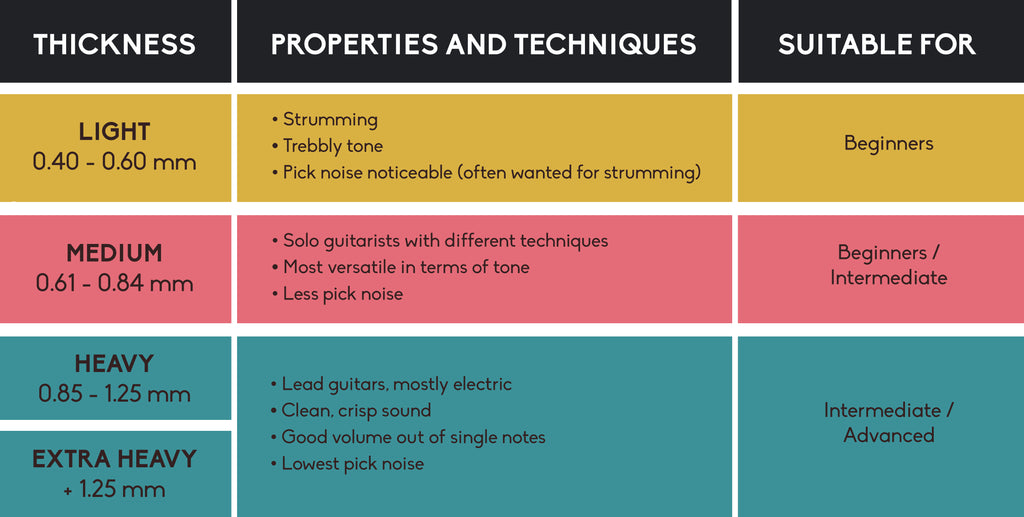
Púas de guitarra delgadas:
Bueno para la guitarra rítmica, pero no excelente para la guitarra solista debido a la falta de control al tocar notas sueltas. Se pliega fácilmente cuando está en contacto con las cuerdas y es ideal para principiantes. Siempre proporciona un sonido que parece fluido (incluso si tu brazo no lo sigue).
Selecciones medianas:
Las púas de guitarra más versátiles y perfectas para guitarristas solistas que utilizan diferentes técnicas en las mismas canciones (rasgueo, solo, palm mute, etc.…). Combinan comodidad, precisión, ritmo y velocidad de juego.
Selecciones gruesas:
Las púas gruesas le dan al guitarrista más control de volumen y ataque en las cuerdas. Favorito entre los guitarristas avanzados. La gente opta por este tipo de grosor porque necesitan precisión para su juego de alto nivel y sus partes solistas. ¡Velocidad de juego garantizada!
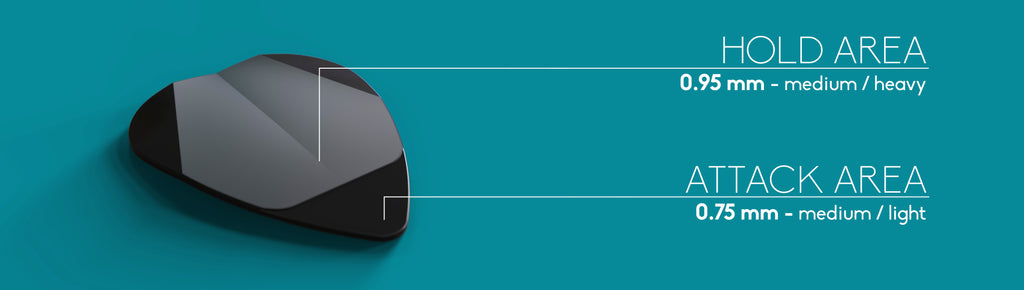
Consejo adicional: algunas púas con grosor variable (diferentes grosores en el área de agarre y el área de ataque) pueden ayudar a combinar estas características al proporcionar un cuerpo rígido y una punta más delgada y flexible.
3- El tamaño total de la púa
El tamaño del pico es el factor más importante al considerar la comodidad. Esto es extremadamente personal porque nadie es igual. Además, este punto está estrictamente relacionado con la forma de la púa de la guitarra.
Es posible que descubra que las púas pequeñas son más fáciles de triturar y crean más velocidad. Tus dedos están más cerca de las cuerdas y sientes más lo que estás tocando. La desventaja de estas púas es que se pueden dejar caer fácilmente porque son más pequeñas.
También puede encontrar que las púas más grandes son más fáciles de sostener y sentirse más cómodas. Experimente con diferentes tamaños y use lo que sea más conveniente para usted.
Por lo general, el tamaño varía entre 15 y 40 mm (como se ve en la figura a continuación).

Algunos guitarristas prefieren las púas de guitarra grandes porque al aumentar las superficies de contacto obtienen un mejor agarre.
4- Materiales y texturas de las púas
Las púas de guitarra realmente se pueden hacer de cualquier cosa. En el pasado, se usaban algunos materiales exóticos para producir púas de guitarra.
La ola tecnológica que vino con los polímeros altamente especializados creó una nueva era de materiales con propiedades sorprendentes. Por lo general, estas son las principales propiedades que debe tener un buen material:
- Alta resistencia mecánica y rigidez.
- Excelente resistencia al impacto
- Propiedades estéticas superiores
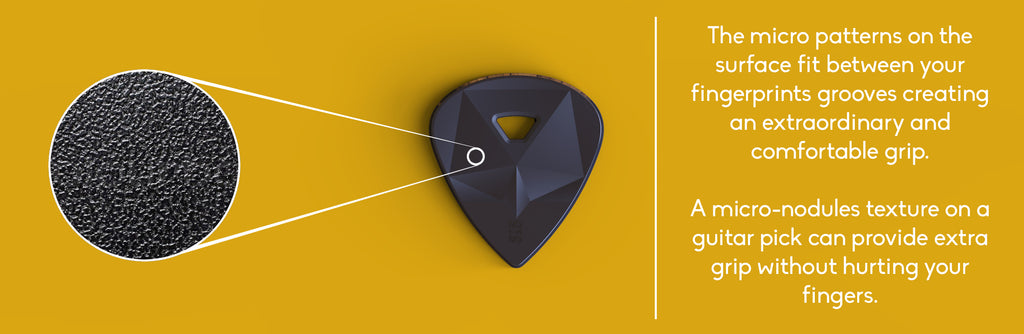
Consejo adicional: las texturas de agarre también dependen del material. Una textura de micronódulos en una púa de guitarra puede proporcionar un agarre extra sin lastimarte los dedos. Lea más en nuestro artículo "¿Por qué las texturas en las superficies de las púas de guitarra pueden ayudar a mejorar su experiencia de tocar?"
Conclusión:
La única forma de encontrar realmente tu púa de guitarra es pasar un tiempo probando nuevas formas, materiales y tamaños. A veces, tus necesidades como guitarrista cambian con el tiempo. La elección que eligió al principio de su carrera puede no ser la que necesita en este momento.
Desarrollar sus habilidades también significa adaptarse a nuevos entornos. Está comprobado que tocar con nuevas guitarras y nuevas púas de guitarra puede ayudarlo a desarrollar sus habilidades generales y mantiene su cerebro flexible, empujándolo para que sea un aprendiz continuo. No tengas miedo a la variedad.
PD: ¿Has pensado en utilizar materiales reciclados? Obtenga más información en nuestro artículo: "Rombo presenta nuevos modelos de púas de guitarra "Eco-Black Range""
