



The Top 6 Best-Selling Guitar Picks from 6 Years of Rombo Picks (And Why Guitarists Love Them)
The Top 6 Best-Selling Guitar Picks from 6 Years of Rombo Picks (And Why Guitarists Love Them)
After six exciting years of designing, testing, and shipping high-quality guitar picks around the world, we’ve learned a lot about what guitarists truly value. From jazz players to metal shredders, beginners to professionals — certain picks consistently rise to the top.
In this article, we’re celebrating our top 6 best-selling guitar picks, based on real customer preferences, playing styles, and thousands of reviews. Whether you’re looking for precision, versatility, warmth, or speed, there’s something here for every guitarist.

We’ll also share how these picks evolved, how we determined their popularity, and help you figure out which one might be right for your style. If you’re curious about how shape, thickness, material, and grip influence your playing — this guide has it all.
Our Journey: 6 Years of Listening to Guitarists
Rombo Picks was born from a deep obsession with design and the belief that guitar picks deserved more innovation. Since day one, we’ve been testing materials, studying ergonomics, and gathering insights from thousands of guitarists around the world.
Over the past six years, these insights have shaped every design decision. The picks on this list aren’t just best-sellers — they’re symbols of how far we’ve come in understanding what players want in their hands.
Let’s dive into the top 6 picks, why they stand out, and what real musicians have to say about them.
1. Rombo Diamond — Precision and Power for Advanced Players
Why It’s a Bestseller
The Rombo Diamond has been our best-selling pick for years. With a sharp, focused tip and a sturdy 2.00 mm thickness, it delivers incredible precision and fast response. It’s engineered for technical players who rely on accuracy and speed, but also want power and volume.
Ideal For:
-
Fast alternate picking
-
Shredding and solos
-
Djent and technical metal (we call it the palm mute master!)

Playing Feel
The pointed shape gives a tight, precise attack. Players describe it as “gliding through strings with minimal resistance.” Despite its stiffness, it feels natural thanks to beveled edges and a textured grip.
The tone is dark, direct, percussive, and focused — ideal for cutting through a mix. Its full-body shape adds depth and enhances low-end frequencies.
Common Reviews:
-
“Best pick I’ve ever used for fast picking.”
-
“It feels like a scalpel for your tone — ultra precise.”
-
“I use it for both solos and tight rhythm parts. It’s super stable.”
Behind the Design
This pick was designed for advanced players looking for full control. Its geometry, grip pattern, and material blend make it one of our most complex, feedback-driven designs.
2. Rombo Origami — The Ultimate All-Rounder
Why It’s a Bestseller
Origami stands out for its adaptability. Inspired by folded paper structures, its ergonomic shape offers a natural grip that suits nearly every genre. With mid-range thickness and moderate flex, it balances comfort and articulation.
It also showcases our innovation in grip design: The folded surfaces prevent rotation, providing extra stability.
Ideal For:
-
Strumming and arpeggios
-
Blues leads, pop, and rock riffs
-
Players who switch styles frequently
-
Warm tones on acoustic guitar

Playing Feel
The surface texture is subtle but secure. It feels balanced — neither too thick nor too light. Whether you’re strumming chords or picking melodies, it responds with warmth and clarity. The rounded tip reduces string noise while keeping note definition.
The variable thickness (a thicker body tapering to a thinner tip) helps preserve bass tones and reduce that annoying click-clack sound on acoustic guitars.
Common Reviews:
-
“It’s the pick I reach for when I don’t know what style I’ll play.”
-
“Great for both acoustic and electric.”
-
“Super comfortable. I never drop it.”
Why It Matters
Every guitarist needs a workhorse pick, and Origami is ours. Its design isn’t extreme in any one direction — and that’s exactly why it works so well.
3. Rombo Horizon — Elegance Meets Performance
Why It’s a Bestseller
Horizon blends classic elements with modern engineering. A bit thinner than the Diamond, with a super-curved tip and elegant silhouette, it’s a favorite for players who want clean articulation without harshness.
Ideal For:
-
Funk and jazz fusion
-
Sweep picking
-
Riffs that demand clarity (metal and rock included)

Playing Feel
Horizon delivers controlled brightness. The tone is clean and expressive, with just enough edge for fast passages. Its surface geometry enhances grip, while the beveled edges allow subtle dynamic shifts.
It’s designed to feel effortless — and yes, it’s my personal favorite, and the design I’m most proud of.
Common Reviews:
-
“The clearest attack I’ve ever had.”
-
“My go-to for funk rhythm and jazzy leads.”
-
“A great compromise between flexibility and control.”
The Experience
Horizon is the kind of pick that reveals its strengths over time. Surgical, reliable, and deeply satisfying.
4. Rombo Shell — A Refined Jazz III Alternative
Why It’s a Bestseller
Small, sharp, and punchy — Rombo Shell is our tribute to the Jazz III, reimagined with better grip and more comfort. Designed for speed and control, it stays securely in your fingers, even during intense play.
Ideal For:
-
Solos
-
Funk comping
-
Fast melodic playing (metal, rock, fusion)

Playing Feel
Shell offers surgical precision in a compact size. The tip is sharp, and the grip is firm. Many describe it as an extension of the fingers — perfect for speed-focused genres.
Common Reviews:
-
“It’s like a Jazz III but better in every way.”
-
“So fast, but still feels controlled.”
-
“My favorite pick for complex jazz lines.”
Design Insight
We preserved the classic jazz-style tip but enhanced the grip and ergonomics. For fans of small picks and fast play, Shell is a game-changer.
5. Rombo Classic — Warm, Familiar, and Beginner-Friendly
Why It’s a Bestseller
Rombo Classic is our most traditional pick. With a slightly flexible 0.38 mm profile and soft texture, it’s ideal for strumming and dynamic acoustic playing.
Ideal For:
-
Acoustic guitar
-
Folk and singer-songwriter styles
-
Beginners and casual players

Playing Feel
It feels light and familiar, with a warm and rounded attack. The soft grip prevents slips without distracting from your playing experience.
Common Reviews:
-
“Reminds me of old-school picks, but better.”
-
“My students always prefer this one.”
-
“Perfect for acoustic gigs.”
Why It’s Essential
Not everyone needs an aggressive or technical pick. Classic offers an easy entry into modern pick ergonomics — without overwhelming new players.
6. Rombo Prisma — Designed for Bass and Low Tunings (But Loved by Guitarists Too)
Why It’s a Bestseller
Prisma was originally designed for bass — but it quickly became a favorite among guitarists playing heavy, low-tuned music. Its thick profile and broad tip deliver power and control.
Ideal For:
-
Bass guitar (all styles)
-
Metal and drop tunings
-
Players who want a large, pointy, powerful pick

Playing Feel
Thick, textured, and grippy, Prisma provides a confident, punchy attack. Players say it adds weight and depth to their tone and helps lock in a solid rhythm.
Common Reviews:
-
“Perfect pick for bass — finally.”
-
“I use it on baritone guitar. The control is unreal.”
-
“Heavy pick for heavy tones.”
Design Insight
We included 3D shapes and curved edges to increase mass while maintaining flexibility. Combined with a very sharp tip, Prisma produces bright tones while preserving the round warmth you'd expect from a heavier pick.
How We Determined These Top 6 Picks
This list is based on:
-
Sales data from the last six years
-
Review volume and sentiment
-
Return purchases and customer loyalty
-
Direct feedback from our community
Each pick earned its place through performance, popularity, and long-term player satisfaction.
How to Choose the Right Guitar Pick: A Complete Guide
1. Understand Your Playing Style
Fast soloist? Go firm and sharp.
Strumming chords? Try something thinner and flexible.
2. Explore Pick Thickness
-
Thin (<0.55 mm): Brighter sound, ideal for strumming
-
Medium (0.55–1 mm): Balanced tone and feel
-
Thick (1–2.5 mm): Great for precision and heavy styles

3. Pick Shape and Size
-
Small picks: Control and speed
-
Large picks: Easier grip, especially for big hands
-
Sharp tips: Precision
-
Rounded tips: Warmth

4. Material and Surface Texture
-
Hard materials (e.g., CrystalBright): Bright, snappy tone
-
Softer materials: Warm tones, smooth feel
Tone can also be greatly influenced by shape and size. For example, a pick made from soft materials can sound brighter if it is pointy and thin.
Grip texture, 3D geometries, and variable thickness help prevent slips and enhance comfort — features we’ve heavily innovated at Rombo.

5. Try Before You Decide
Most players find their ideal pick only after trying several. That’s why we offer Variety Packs — so you can explore freely.
6. Factor in Genre and Instrument
-
Metal/Prog: Thick, sharp picks
-
Jazz: Small, smooth picks
-
Acoustic: Medium or thin, rounded picks
-
Bass: Thick, textured picks
(But of course — rules are meant to be broken.)
7. Ergonomics and Comfort
Comfort isn’t cosmetic. A well-designed pick reduces fatigue, increases precision, and makes you a better player.
Still Not Sure? Try Them All.
The best way to find your ideal pick is to experiment.
🎸 Try our Rombo Variety Pack to explore every shape and material.
👉 Use our Rombo Guitar Pick Finder Tool to get personalized recommendations based on your style and preferences.

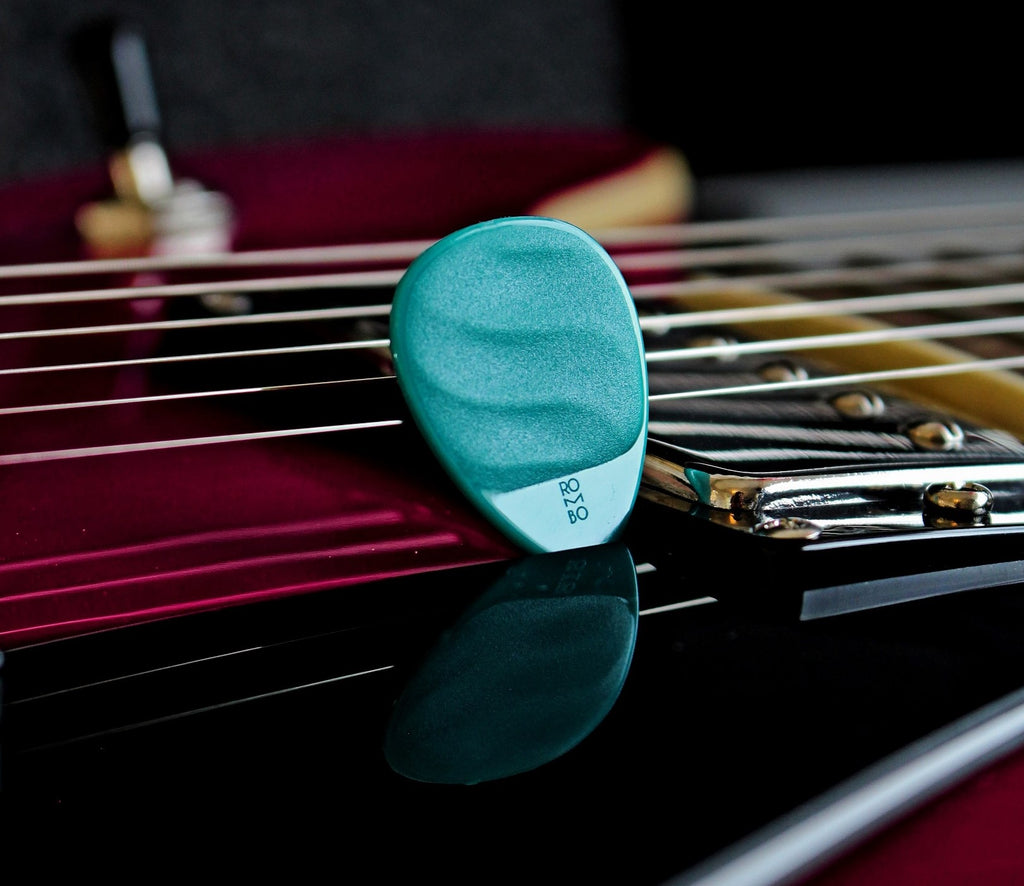
PIcture by @brandon.delgadoe
Final Thoughts
Each of these picks represents a different type of player — and a different chapter of our Rombo journey. Whether you're discovering us for the first time or have been with us from the start, we hope this guide helps you find your perfect match.
From classic silhouettes to futuristic contours, every Rombo pick is built with care, feedback, and inspiration.
Thanks for being part of our story.
— The Rombo Picks Team


¿Las púas de guitarra realmente afectan el tono de tu guitarra?
Tono, timbre, timbre y sonido son algunos de los términos que generalmente se usan para referirse a las ondas de sonido producidas por su guitarra y amplificador.

La música no entiende de restricciones. Entonces, una forma para que usted, como guitarrista, amplíe su repertorio de sonidos de guitarra es haciéndose preguntas simples:
- ¿Por qué debo cambiar el tono de mi guitarra?
- ¿Cómo cambio el tono de mi guitarra?
- Y… ¿Realmente las púas afectan el tono de mi guitarra? ¿Y cómo?
Cubriremos estos aspectos y discutiremos algunos ejemplos específicos de púas de guitarra y técnicas y tonos de guitarra.
¿POR QUÉ CAMBIAR EL TONO DE TU GUITARRA?
Como guitarrista, no solo debe reflexionar sobre su práctica y las mejoras de sus habilidades, sino también buscar formas de aumentar la cantidad de sonidos totalmente diferentes que su guitarra (¡en sus manos!) es capaz de producir.
Imagina la amplia paleta de diferentes sonidos y efectos que necesitarías para aprender 30 canciones de diferentes géneros.
Las ventajas de dominar formas de cambiar el sonido de tu forma de tocar la guitarra son innumerables:
- Tus composiciones serán musicalmente más ricas.
- Desarrollarás tu creatividad innata
- Te obligará a aprender nuevas técnicas.
- Te permitirá pensar fuera de la caja.
En otras palabras, serás un mejor guitarrista.

CÓMO CAMBIAR EL TONO DE TU GUITARRA:
Piensa en la “cadena” de elementos conectados que está presente cuando tocas la guitarra. Me gusta invertirlo y comenzar desde la fuente de sonido:
Comienza con su amplificador de guitarra y la configuración del amplificador y continúa con el cable (de una marca y especificaciones específicas) y sus pedales de efectos particulares. Después de otro par de cables, las pastillas de su guitarra, los circuitos, el tipo de madera y las cuerdas de la guitarra también jugarán un papel en el tono. ¿Qué viene después de eso? La púa de guitarra y tu mano púa. Tenga en cuenta que también su mano inquieta tendrá una influencia en el sonido (presión de las cuerdas).

Si reemplaza solo un elemento, el sonido cambiará.
Lo bueno aquí es que esto es 100% medible grabando la guitarra. Para que todos en casa con un micrófono de clase media puedan comenzar a notar las diferencias. Por supuesto, entonces, ¡el micrófono y la interfaz de audio también jugarán un papel en el tono!
Ahora ya sabe qué “ajustar” para permitirle hacer que los mismos pasajes de guitarra suenen de manera diferente.
¿POR QUÉ UTILIZAR PUNTAS DE GUITARRA PARA CAMBIAR EL TONO?
Ir de nuevo a través de la cadena de sonido completa. De todos los elementos mencionados, las púas de guitarra tienen tres ventajas principales cuando tu objetivo es cambiar el tono:
- El tono cambia de inmediato: no es necesario enchufar/desenchufar equipo nuevo ni cambiar la configuración del equipo.
- Barato: Con una inversión mínima puedes probar decenas de productos.
- Sin necesidad de conocimientos en otras áreas (grabación, efectos, ambientaciones,...)

¡Claro, usar otra guitarra o reemplazar uno de tus pedales tendrá un impacto mucho mayor en el tono! Sin embargo, algo tan simple como usar otra púa de guitarra puede crear diferencias apreciables que escucharás y disfrutarás.
¿CÓMO LAS PUNTAS DE GUITARRA CAMBIAN EL TONO DE SU GUITARRA?
Las púas de guitarra se pueden reducir a 4 cualidades principales: Material, Grosor, Forma y Tamaño.
Estas cualidades definen la "personalidad" de las púas de la guitarra al menos en un 80% y afectan la forma en que vibran las cuerdas de la guitarra. En consecuencia, los diferentes patrones de vibración de las cuerdas de guitarra son diferentes.
Algunos materiales como el nailon producen tonos más cálidos y suaves. Otros como Tortex, crean sonidos más brillantes.
El material también puede influir en el agarre y la flexibilidad.
Las púas de guitarra puntiagudas tienen más ataque y producen tonos más brillantes. Las púas de guitarra redondeadas son especialmente útiles para una liberación suave y tonos más cálidos. En técnicas como el rasgueo, las púas redondeadas producirán menos ruido de púas.
Las púas finas y algunas púas medianas son muy flexibles. Esta cualidad puede producir un “ataque ágil” muy característico que no es posible con púas muy gruesas.
Por supuesto, todo está interconectado: ¡la flexibilidad también depende del material y la forma! El grosor también afecta el agarre y el ruido de la púa de guitarra.
Cuanto más grande es el pico, más "masa" tiene. Las púas con mucha masa producirán tonos más cálidos, oscuros y llenos. Las selecciones pequeñas tienden a ser mucho menos flexibles y tienen un ataque más agresivo.
Como puedes ver, tienes que considerar todos los factores juntos. Una púa Tortex puede producir tonos cálidos, debe tener la forma, el grosor y el tamaño correctos. Por otro lado, lo mismo sucede con las púas de nylon: una púa de nylon de tamaño mediano muy puntiaguda puede producir sonidos más brillantes que la púa de guitarra Tortex promedio menos puntiaguda.
Recopilemos tres ejemplos ideales:
PUNTA DE GUITARRA IDEAL PARA TONOS DE OVERDRIVE GRUESOS, COMPLETOS Y DEFINIDOS:
Una púa de guitarra ideal para un sonido de distorsión o sobremarcha grueso, completo y oscuro podría estar hecha de nailon. Debe tener una punta afilada para el control de notas y un grosor mínimo de 1,5 mm. Cuanto más grande sea la púa, más grueso y lleno será el tono.
Un ejemplo concreto de esto podría ser Jazz iii XL o Rombo Diamond . El último utiliza un grosor variable a lo largo de su cuerpo para aumentar su masa total y crear tonos aún más completos con graves altos de fondo.

PUNTA DE GUITARRA IDEAL PARA UN RASGUEO CÁLIDO CON RUIDO DE PUNTA REDUCIDO
Rasguear es especialmente fácil de realizar cuando la punta de la púa de guitarra es redondeada. Para lograr tonos aún más cálidos, la púa de rasgueo ideal debe tener suficiente masa. El material Nylon, en combinación con un grosor medio y la punta redondeada ya mencionada, ayudarán a reducir el ruido de la púa.
Dependiendo de sus preferencias, puede usar grosor medio o grueso. El último es más difícil de dominar pero reducirá sustancialmente el ruido de púa.
Buenos ejemplos de esto son Rombo Origami (calibre medio) o Rombo Waves (calibre grueso)
PUNTA DE GUITARRA IDEAL PARA TONOS CLAROS Y DEFINIDOS
Los tonos de guitarra claros y definidos son producidos por puntas de púas puntiagudas. Idealmente, la superficie de la punta está pulida y tiene un borde biselado.
La mayoría de los guitarristas prefieren púas pequeñas para este tipo de tonos. El punteo de barrido, el punteo alternativo, los armónicos de pellizco y otras técnicas avanzadas de guitarra solista son mucho más fáciles de realizar con este tipo de púas.
Dependiendo de tus preferencias, puedes elegir diferentes materiales: Tortex aumentará el ataque y creará picos muy brillantes, mientras que Nylon producirá un sonido más completo con más graves. Otros materiales (celuloide, carbón, madera,...) se comportarán de forma diferente.
Rombo Jade es el candidato perfecto para velocidad, control y ataque.

CONCLUSIÓN
¿Las púas cambian el tono de tu guitarra? ¡Definitivamente sí!
No solo el tono se ve afectado, sino que otros aspectos como la flexibilidad, el agarre, el ruido de la púa, el ataque o el control también se verán afectados por la púa de la guitarra.
Los cambios de sonido permanecerán como una forma de agregar algo de color y dinámica a su música y las púas de guitarra pueden ayudarlo aquí. Con un presupuesto muy bajo y poco tiempo, puedes experimentar y agregar algo nuevo a tu práctica diaria de guitarra.
La forma más conveniente de probar muchas púas de guitarra diferentes en una sola sesión es probar un paquete variado que contiene muchas púas de guitarra diferentes. ¡Aquí puedes encontrar el nuestro!
